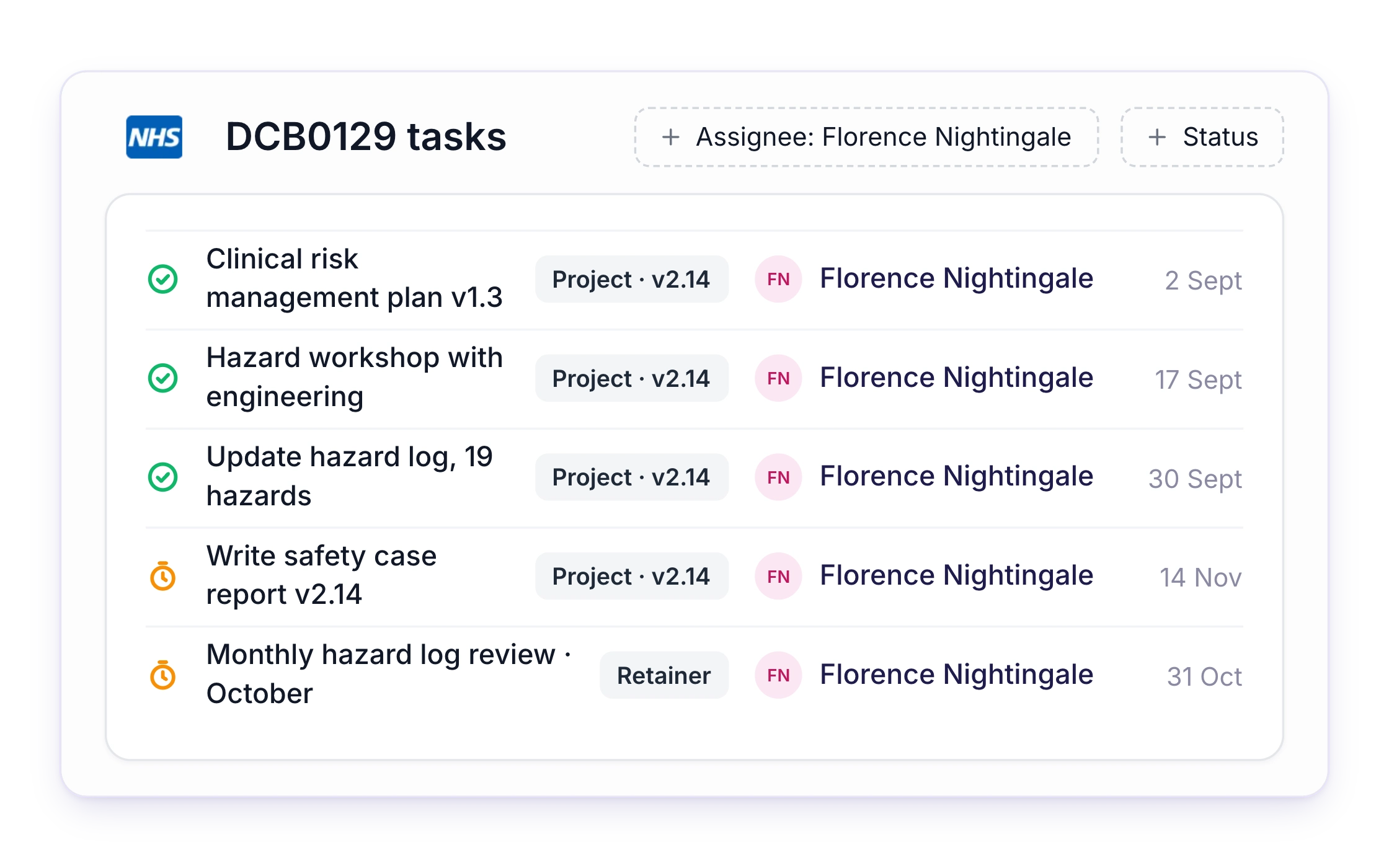
Spend less time on manual work
Templates designed by clinical safety officers, live hazard log data and linked records take care of the repetitive work, so producing and updating your DCB0160 documents takes minutes, not a quarterly clean-up.
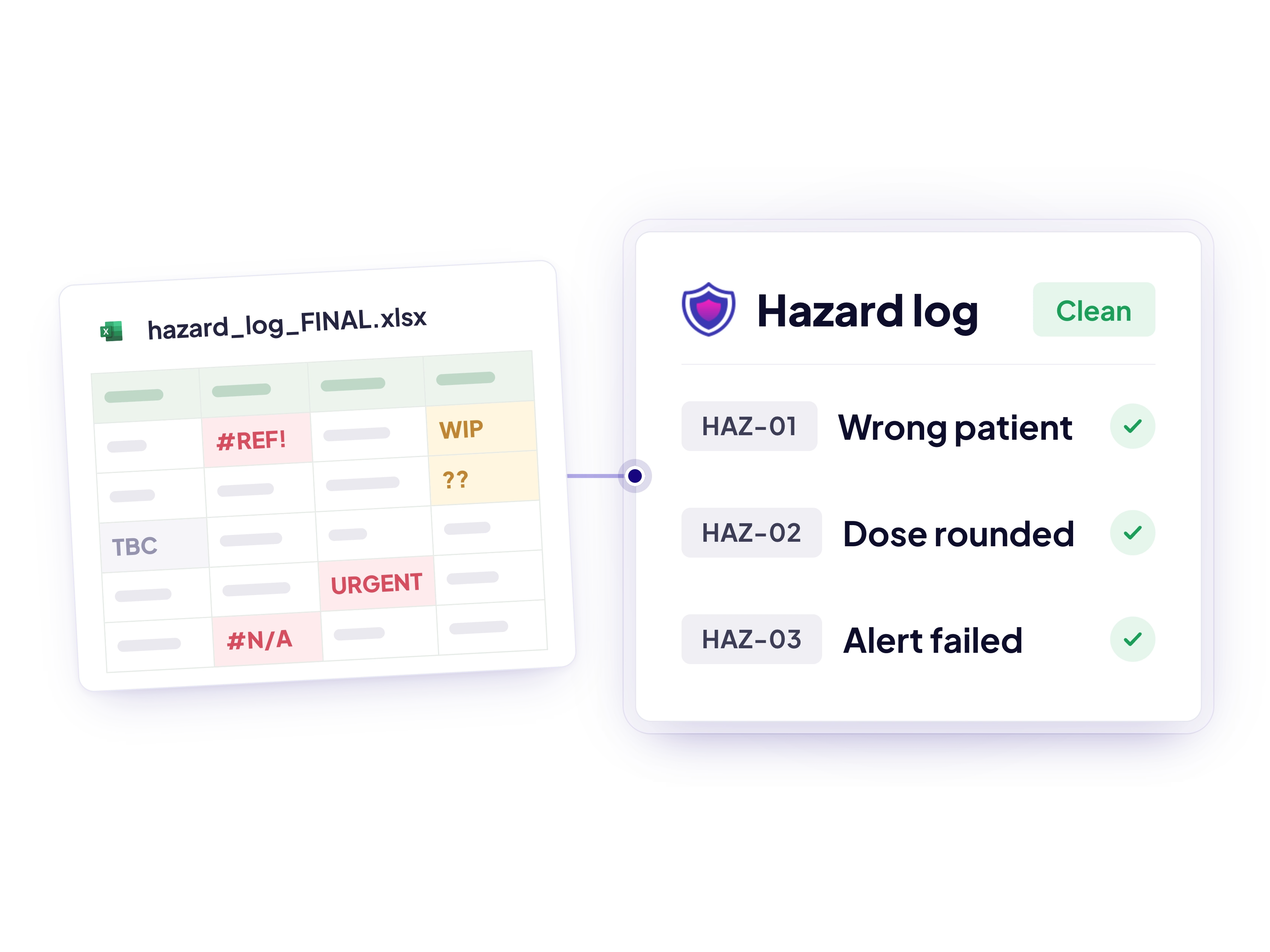
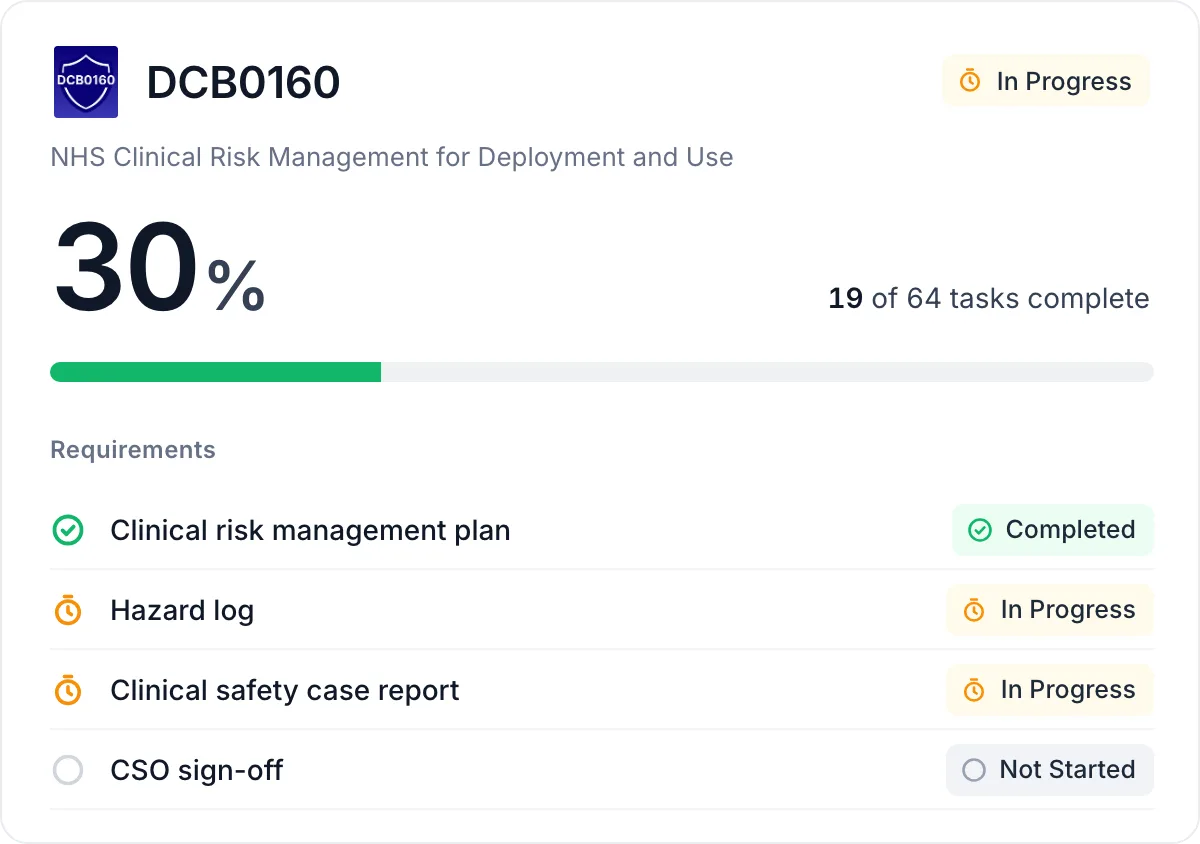
Assuric gives you the hazard log, clinical safety case, supplier documentation and CSO support to meet DCB0160 for every system you deploy, all in one place.
Trusted by healthcare organisations


Features
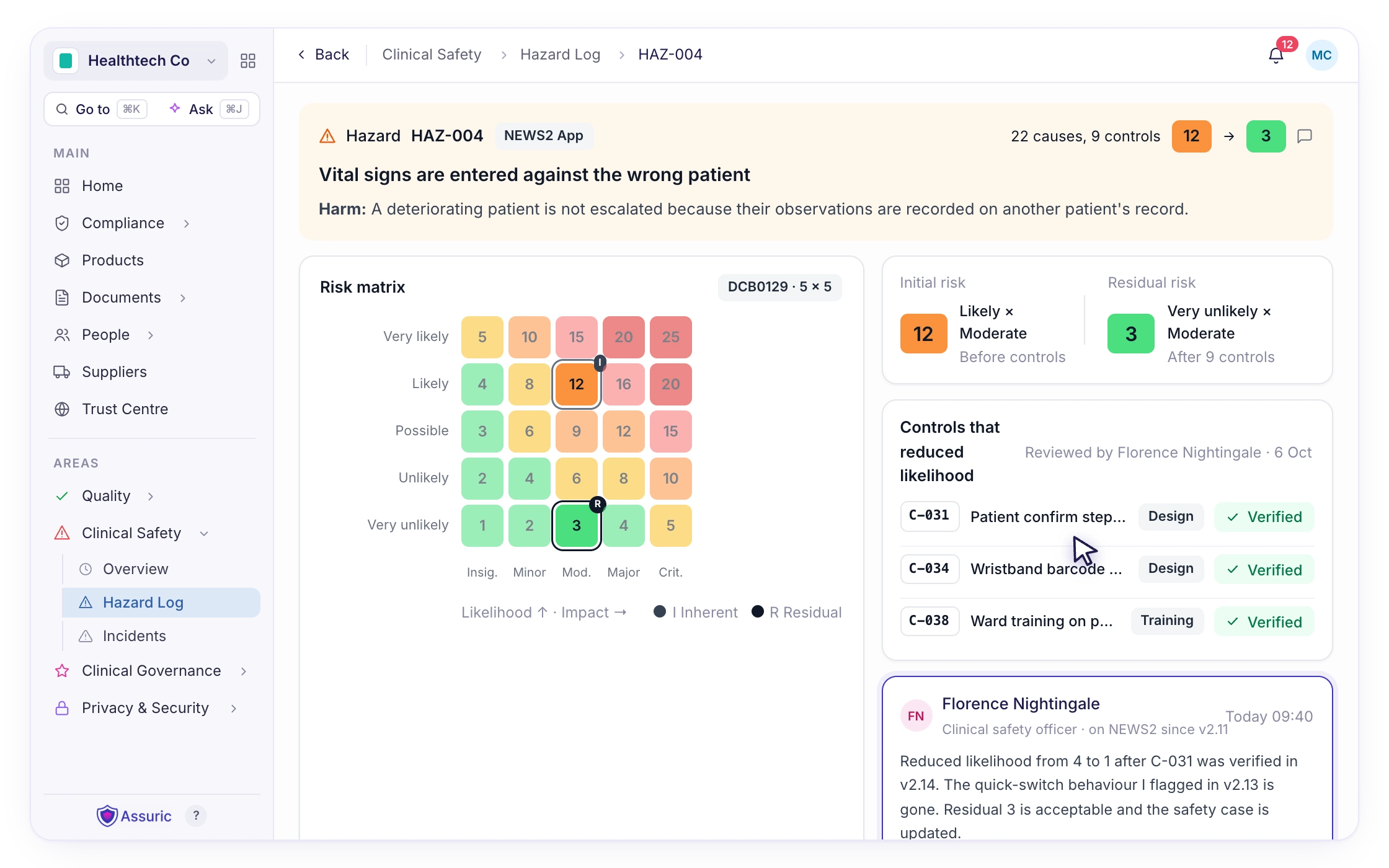
Hazard log
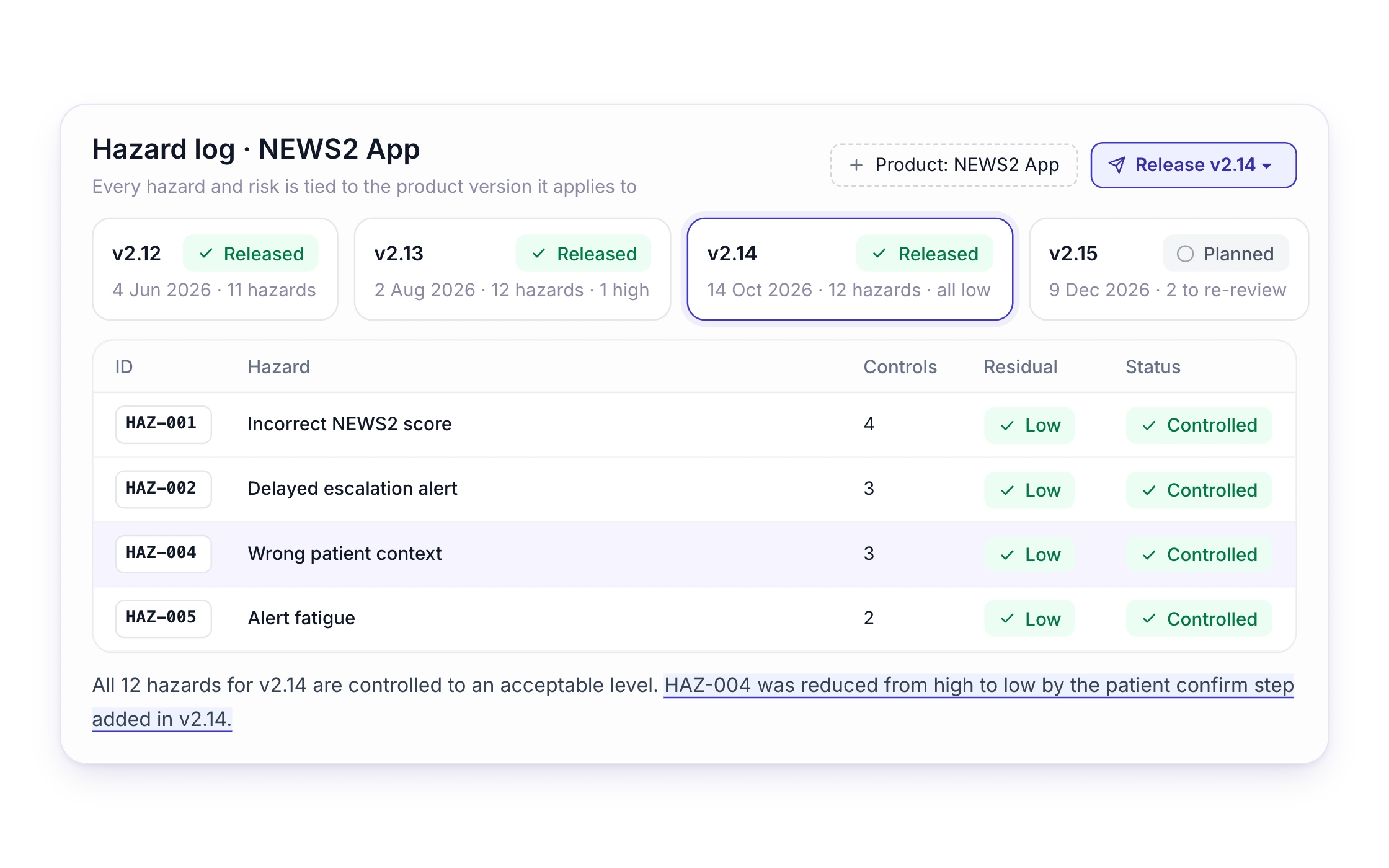
Designed by clinical safety officers. Link hazards, causes, controls and evidence, score risk on your own matrix and get AI suggestions, for every system you deploy.
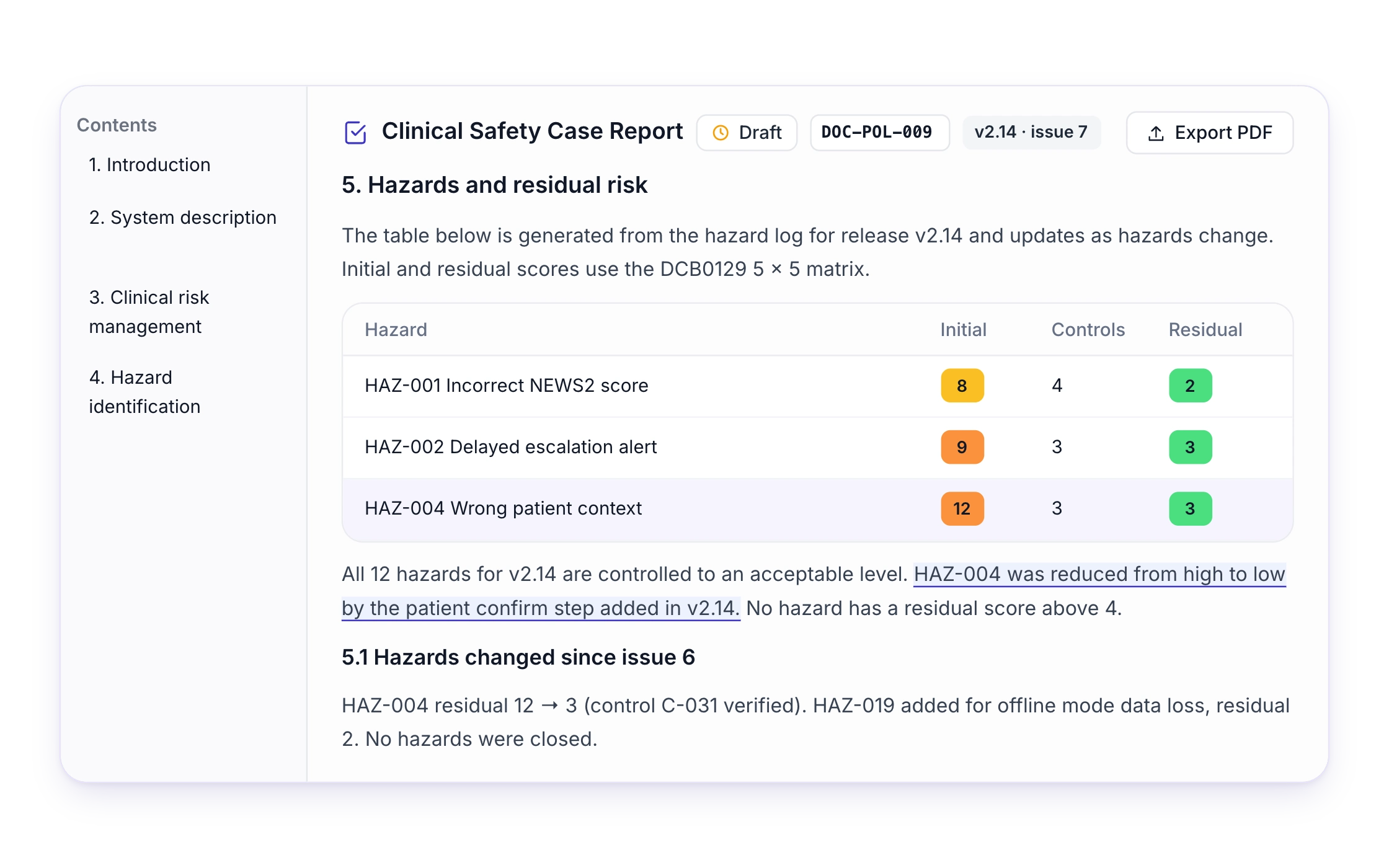
Document & report management
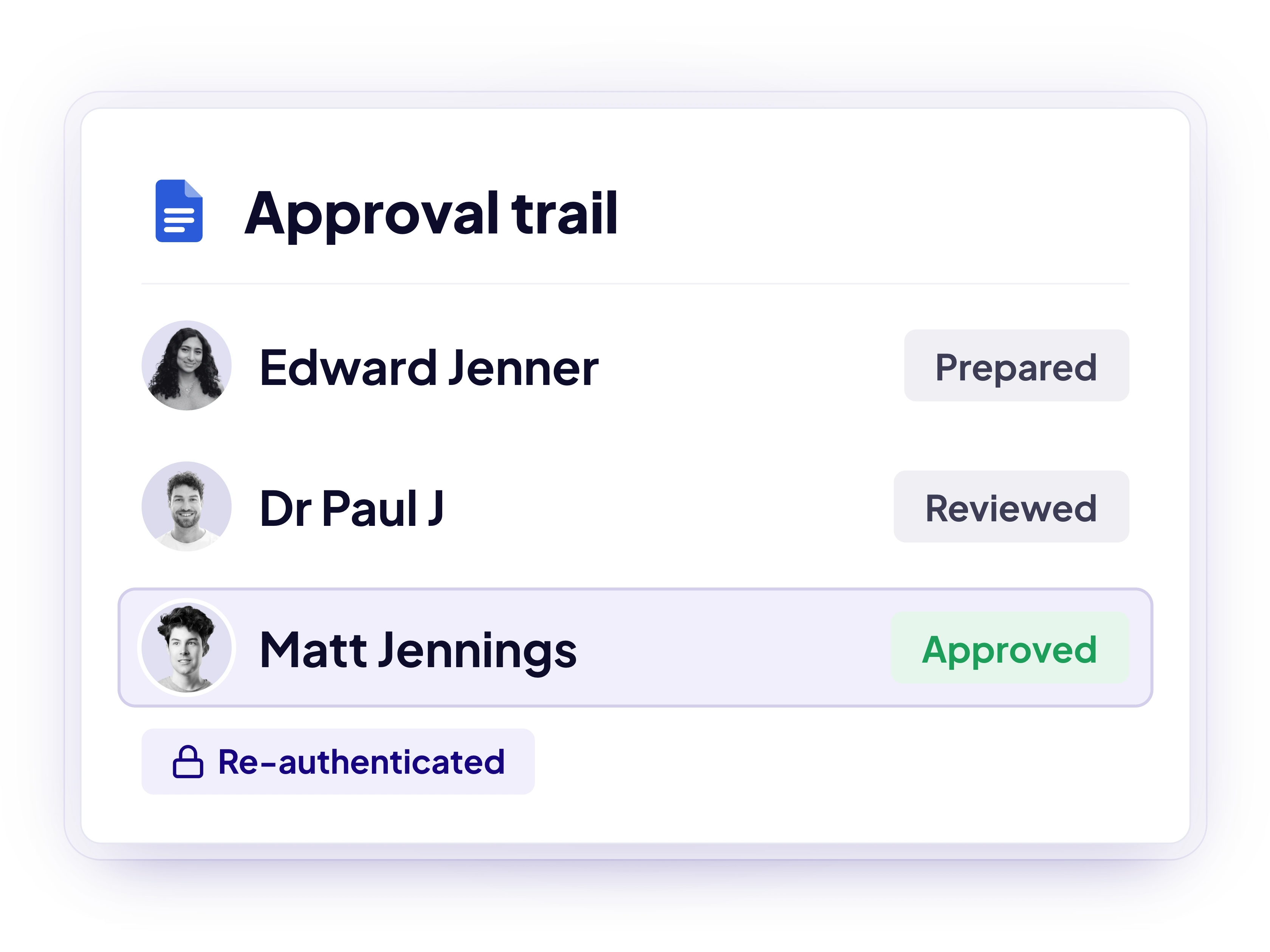
Generate your clinical safety case report from your live hazard log, and create your clinical risk management plan from templates, with owners, reminders, version control and CSO approval built in.
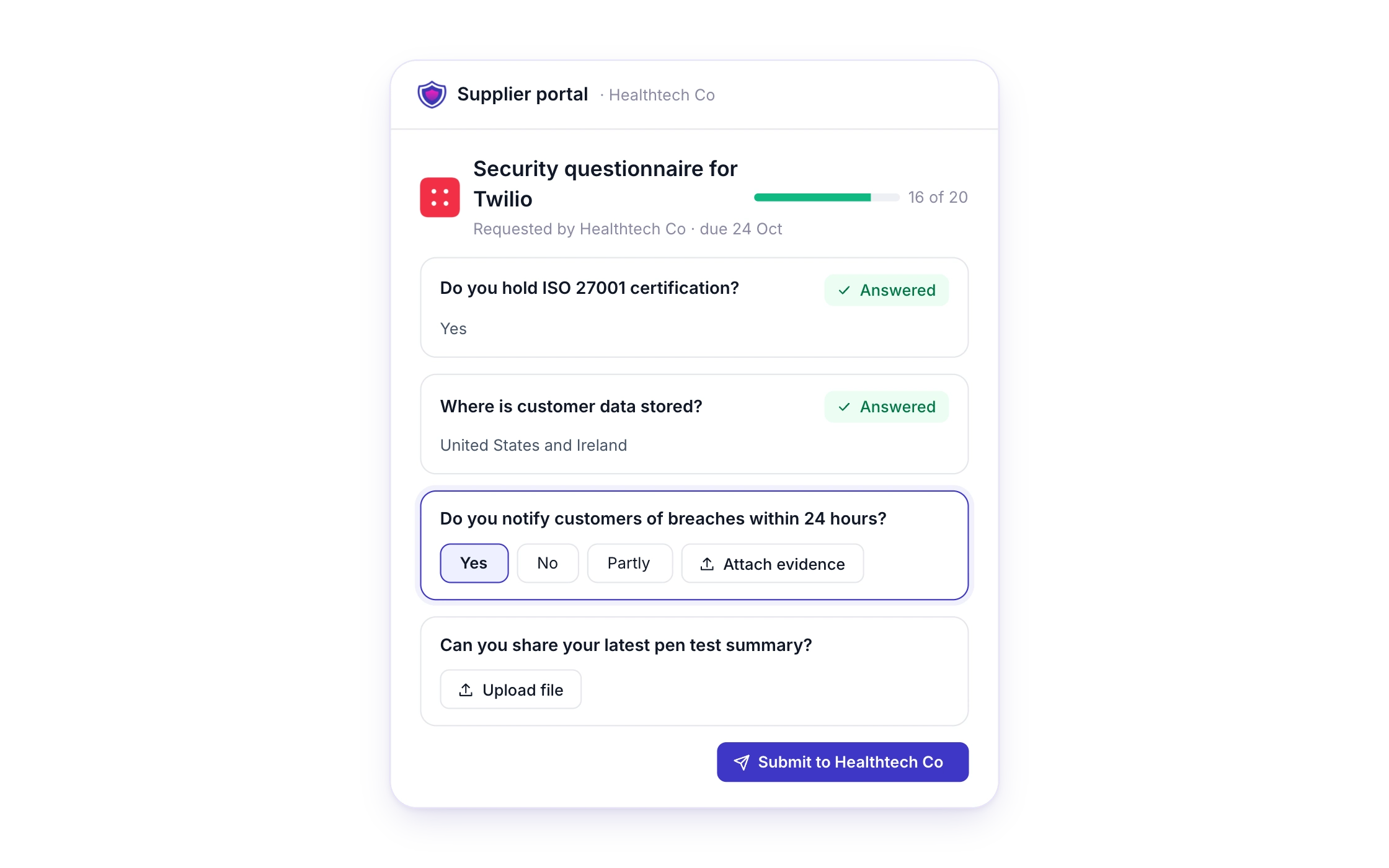
Supplier management
Request each supplier’s DCB0129 safety case and supporting evidence through the supplier portal, and keep it alongside your own hazard log.
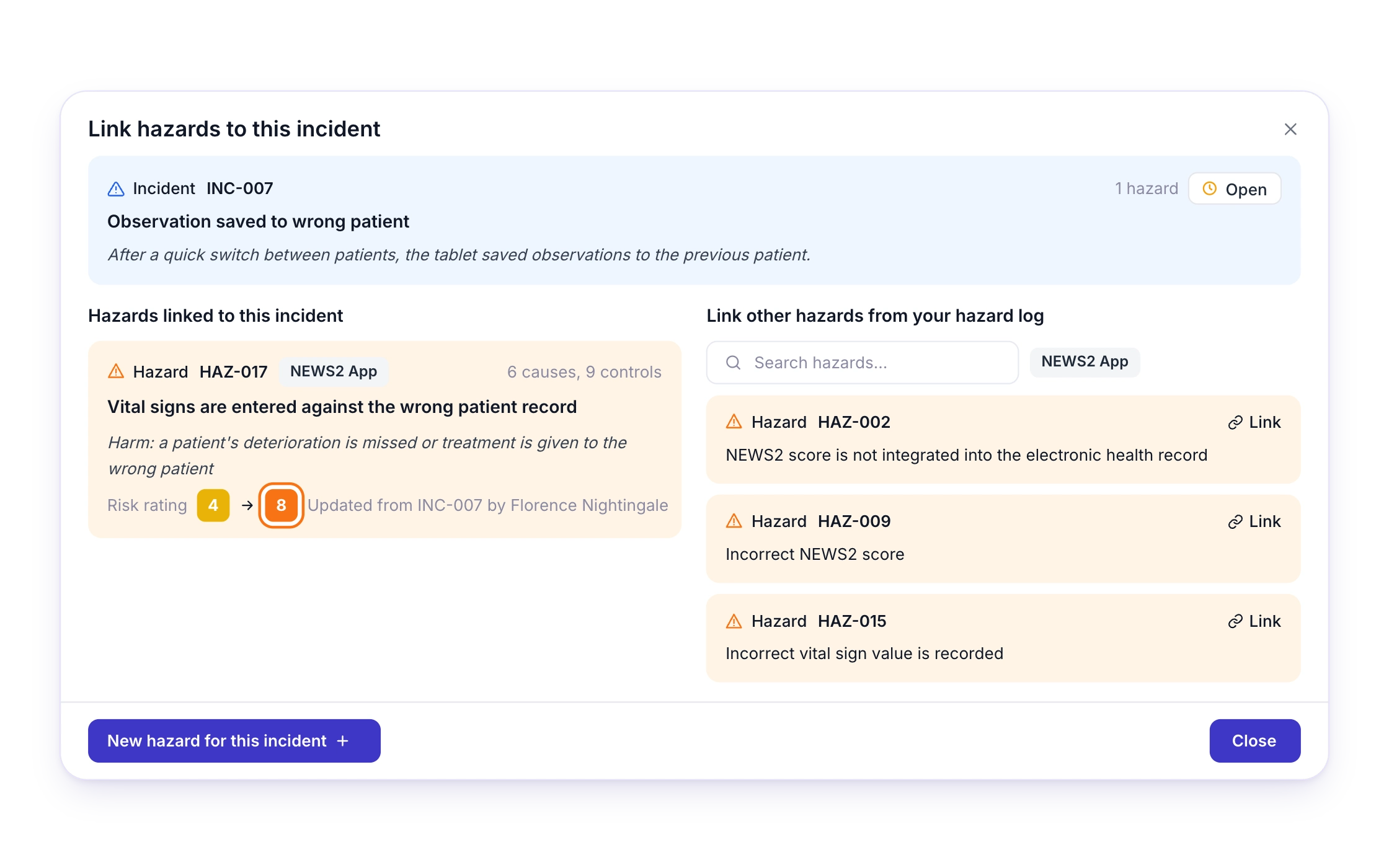
Incident management
Log and investigate clinical incidents with owners assigned, and flag the hazards and controls each one affects for reassessment.
Benefits
Templates designed by clinical safety officers, live hazard log data and linked records take care of the repetitive work, so producing and updating your DCB0160 documents takes minutes, not a quarterly clean-up.
Hazards, controls, evidence and approvals stay linked, so when your board, an assurance review or the CQC asks how a system was made safe to deploy, the answer is already in Assuric.
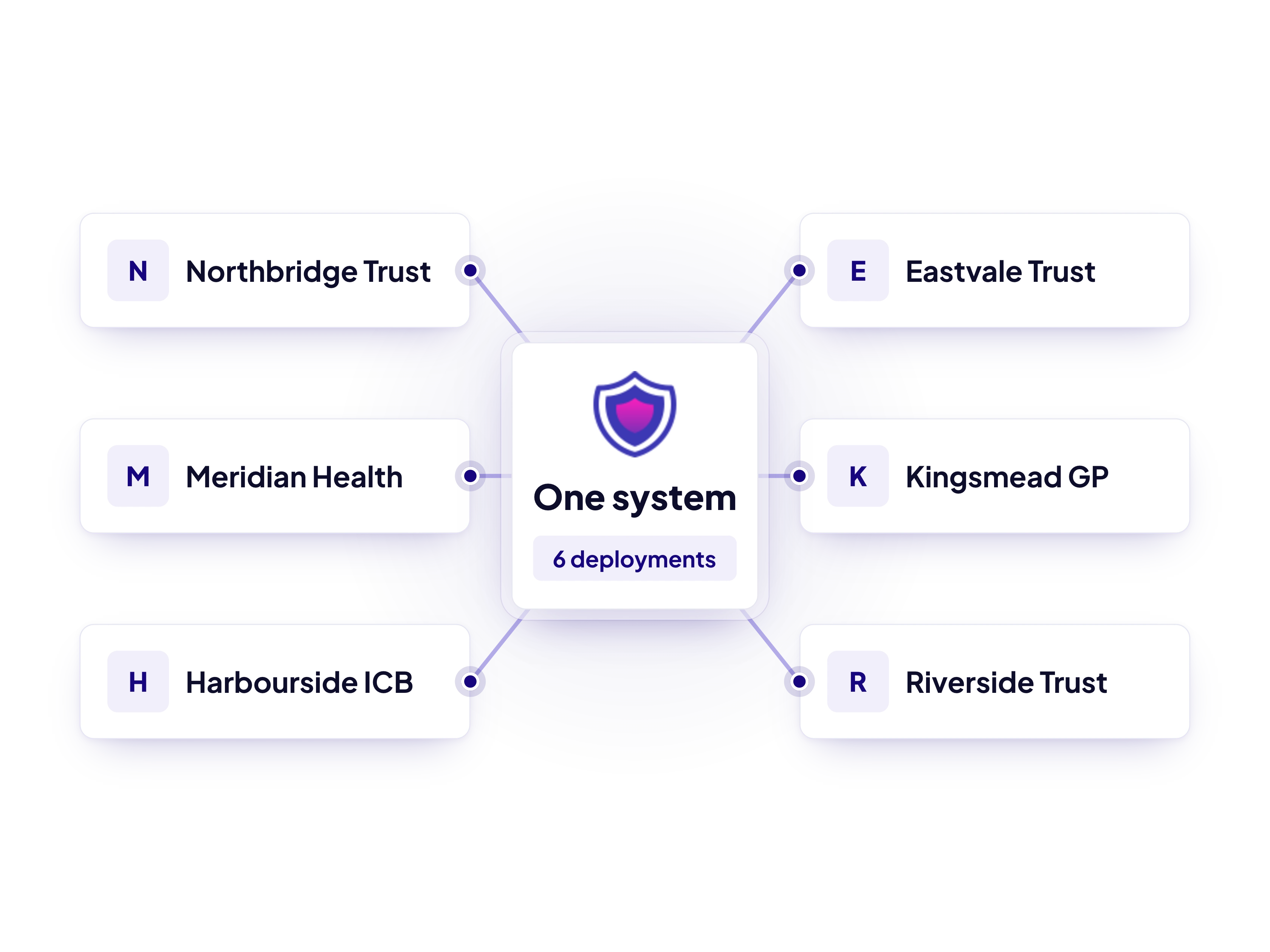
Manage hazard logs for every system you deploy in one place, from your EPR to ambient voice technology, with each supplier’s DCB0129 safety case kept alongside.
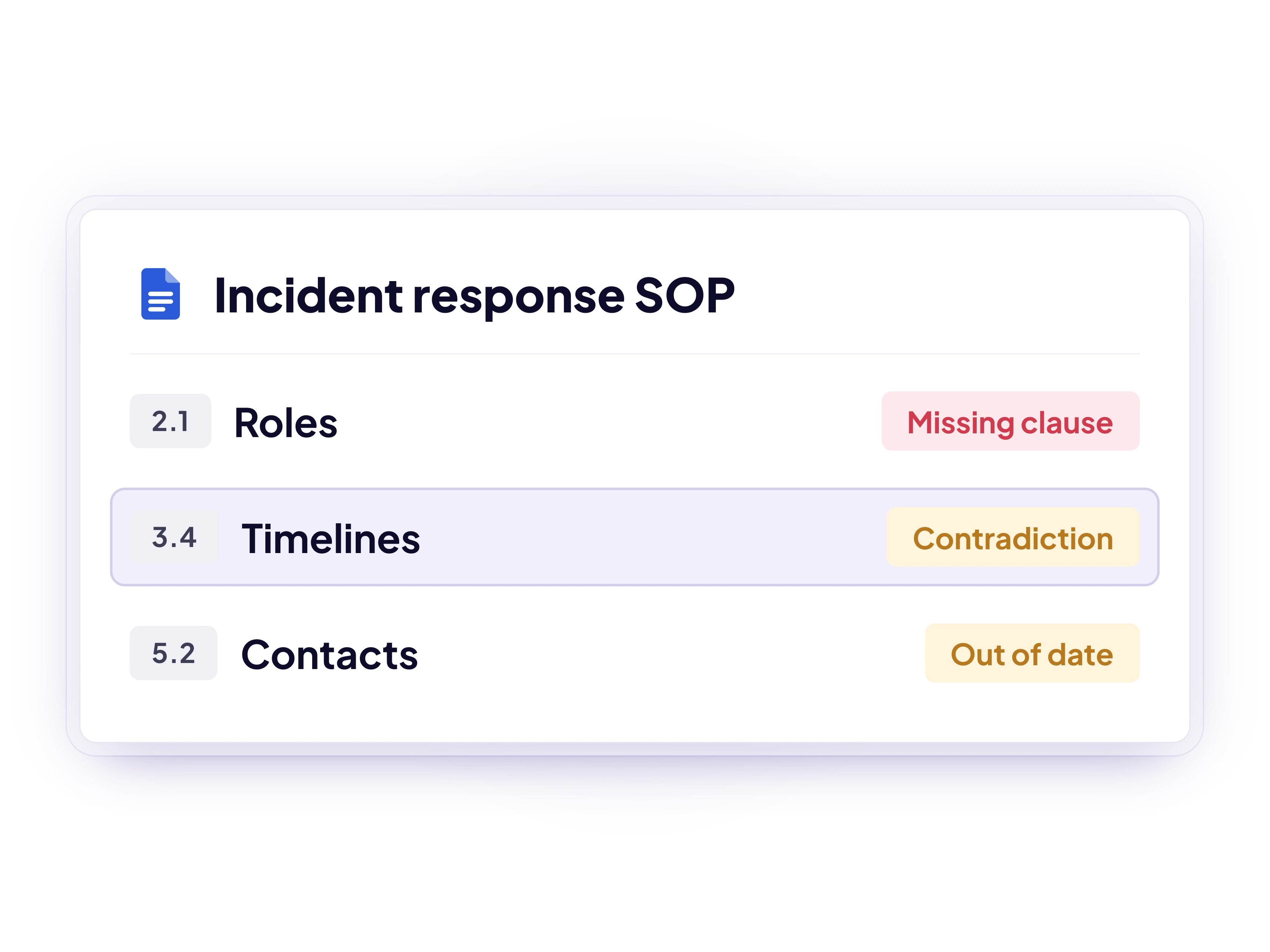
AI suggests hazards, causes and controls based on the system you’re deploying and how it will be used, and drafts updates to your safety case from your live hazard log, so your CSO reviews and approves rather than writing from scratch.
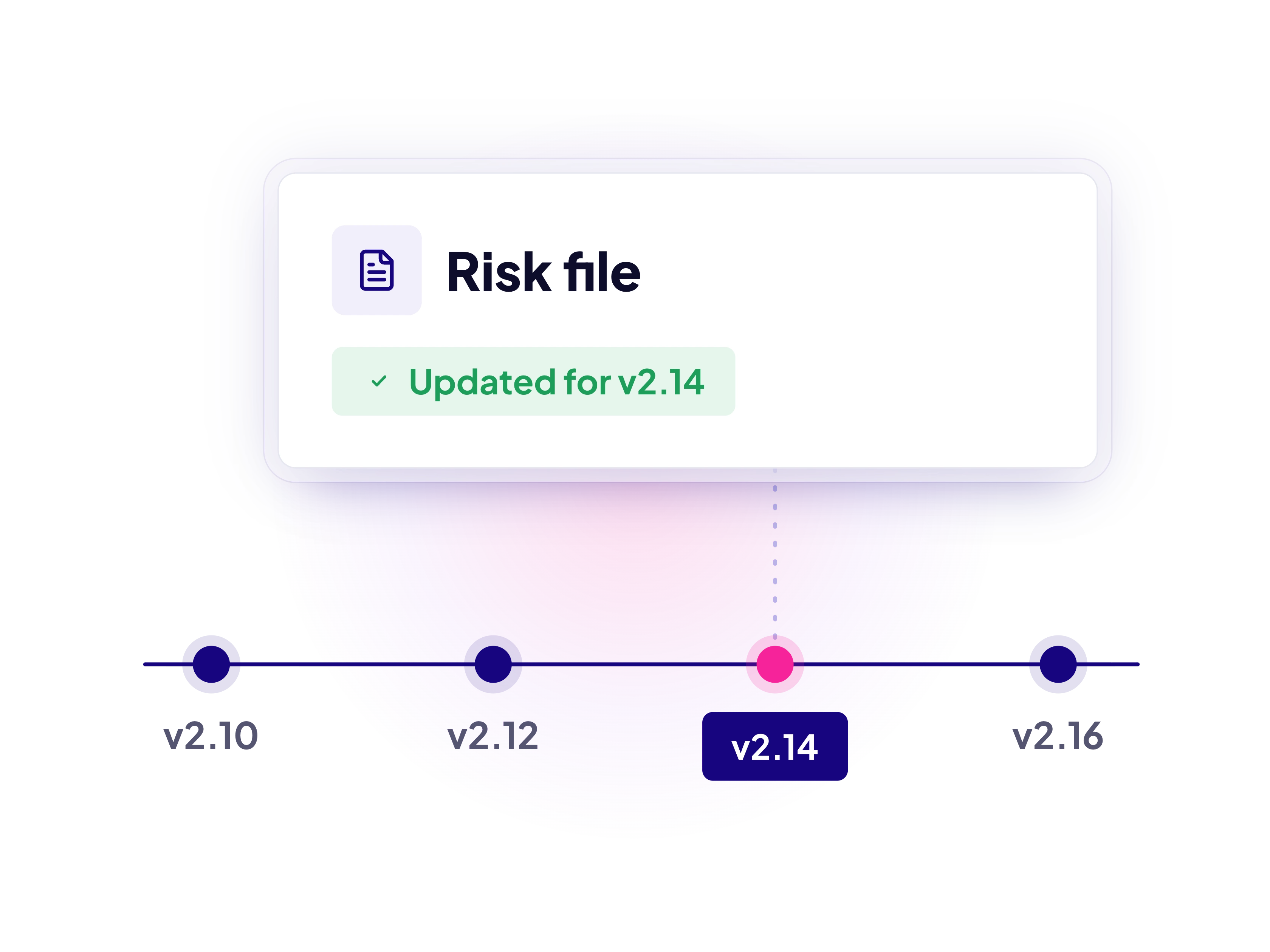
Upgrades, configuration changes and incidents flag the hazards they affect for reassessment, so your CSO reviews what changed rather than reopening the whole case.
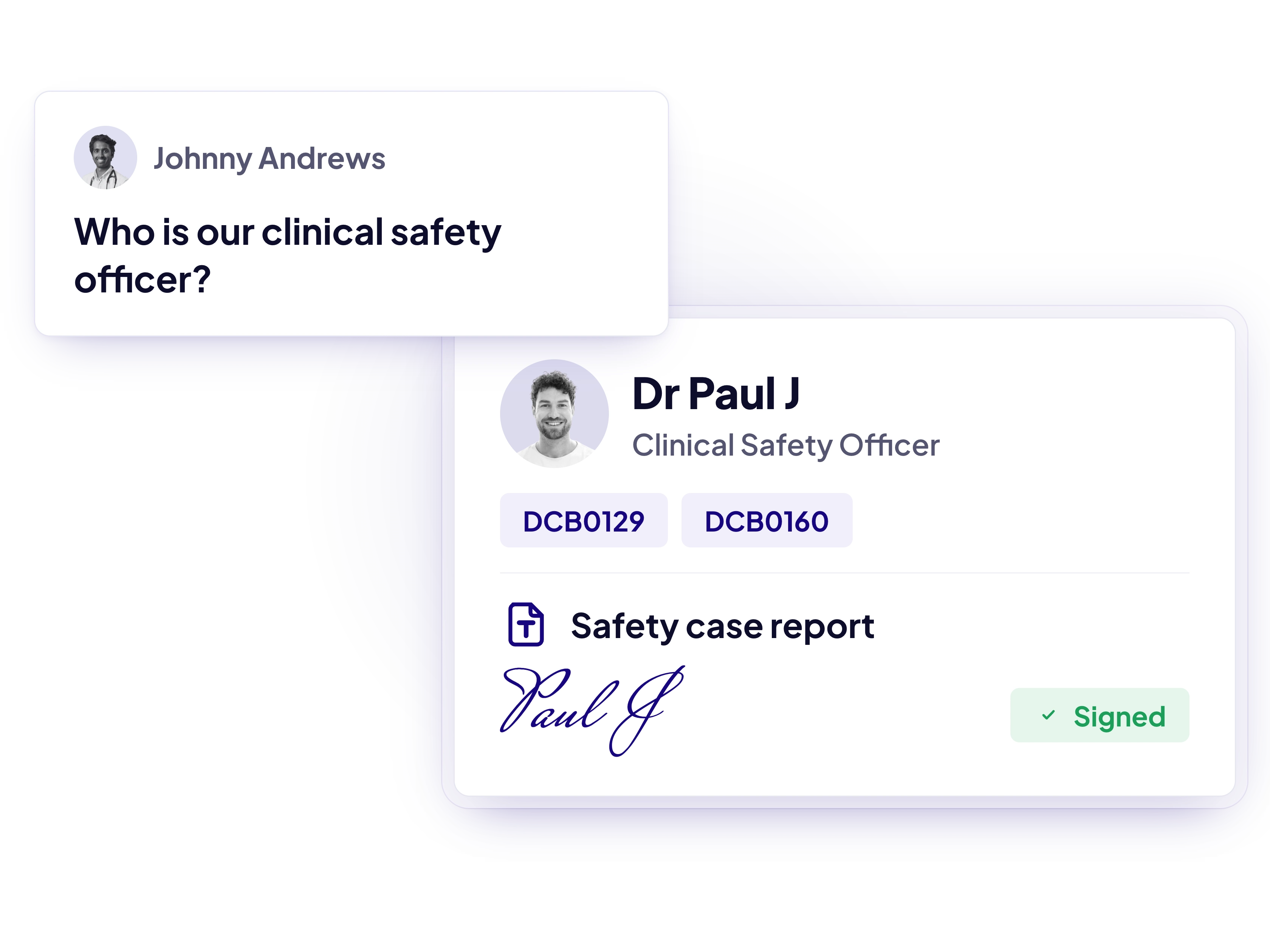
Our clinical safety officers work in your workspace, become fluent in your systems and sign your DCB0160 documents, while Assuric’s automation keeps their time on expert advice, not admin.

“We couldn't speak highly enough of both the Assuric team and the platform itself, which is incredibly easy to use, and with the skill and hardworking nature of the Assuric team. They've been a key component in accelerating our progress and deployments!”
Maks Kozarzewski
COO, VitVio

“The Assuric platform is a game changer in the clinical risk management field. It has been carefully designed to make the job of a CSO significantly more streamlined. The team are excellent and responsive to any product suggestions I have requested, and it has been a pleasure to work with them.”
Paul Llewellyn
CCIO, Accenture

“Assuric has been fantastic in helping us quickly and safely navigate regulatory compliance in the UK. From completing Cybersecurity requirements to DSPT, DCB0129, and DTAC, the team was supportive, extremely knowledgeable, and the platform made everything quick and straightforward. A separate regulatory company we consulted at the beginning even remarked on how quickly we achieved compliance!”
Katie Baker
Director UK & Ireland, Tandem
Get in touch if we haven't answered your question below, and we’ll always be happy to help!
DCB0160 is a mandatory clinical risk management standard in England, under section 250 of the Health and Social Care Act 2012, for health and care organisations deploying health IT systems.
DCB0129 and DCB0160 are overlapping clinical safety standards. DCB0129 applies to manufacturers or suppliers of digital health technologies or health IT systems. DCB0160 applies to the health and care organisations deploying them.
Yes. DCB0160 requires you to nominate a Clinical Safety Officer: a clinician, currently registered with a professional body, who is appropriately trained in clinical safety. They can be internal or external, and we provide expert external CSOs as required.
A Clinical Safety Officer must be a suitably qualified and experienced clinician, with current registration with an appropriate professional body. They need to be knowledgeable in risk management and its application to clinical domains, and make sure the defined clinical risk management processes are followed. Our clinical safety officers are experienced in using Assuric, so you can become compliant quickly.
DCB0160 expects you to run a clinical risk management process and keep a record of it for each health IT system you deploy. The key documents are a clinical risk management plan, a hazard log and a clinical safety case report, signed off by your Clinical Safety Officer. Assuric has templates for each of these, so you never start from a blank page.
Your supplier does its own clinical safety work under DCB0129 and should share its clinical safety case with you. Your DCB0160 work then looks at the risks of using that system in your own setting. Assuric lets you request and keep track of supplier documentation, including DCB0129 clinical safety cases, alongside your own hazard log.
Yes. You can see what is complete, in progress and not started across every safety task, with owners against each one.
Yes. AI suggests hazards, causes and controls based on the system you’re deploying and how it will be used, so your CSO reviews and refines rather than starting from scratch.
Assuric was built by NHS doctors, experienced clinical safety officers, technology experts and software as a medical device regulatory specialists.
See how Assuric brings your hazard logs, safety cases, supplier documentation and CSO support together, ready for your next assurance review.