Experienced and skilled Data Protection Officers
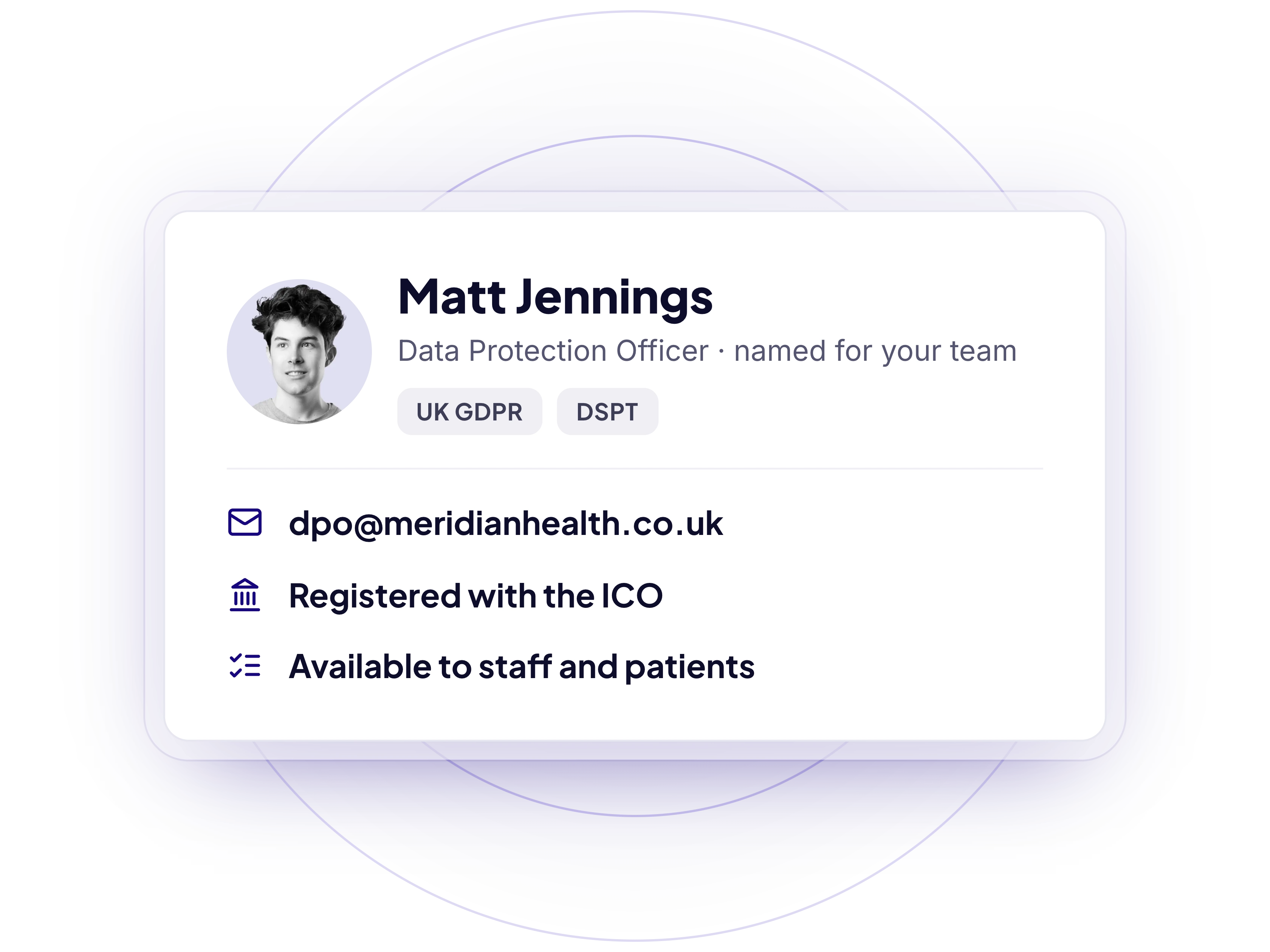
An experienced data protection specialist acts as your appointed DPO under UK GDPR, named on your documentation and your contact point with the ICO.
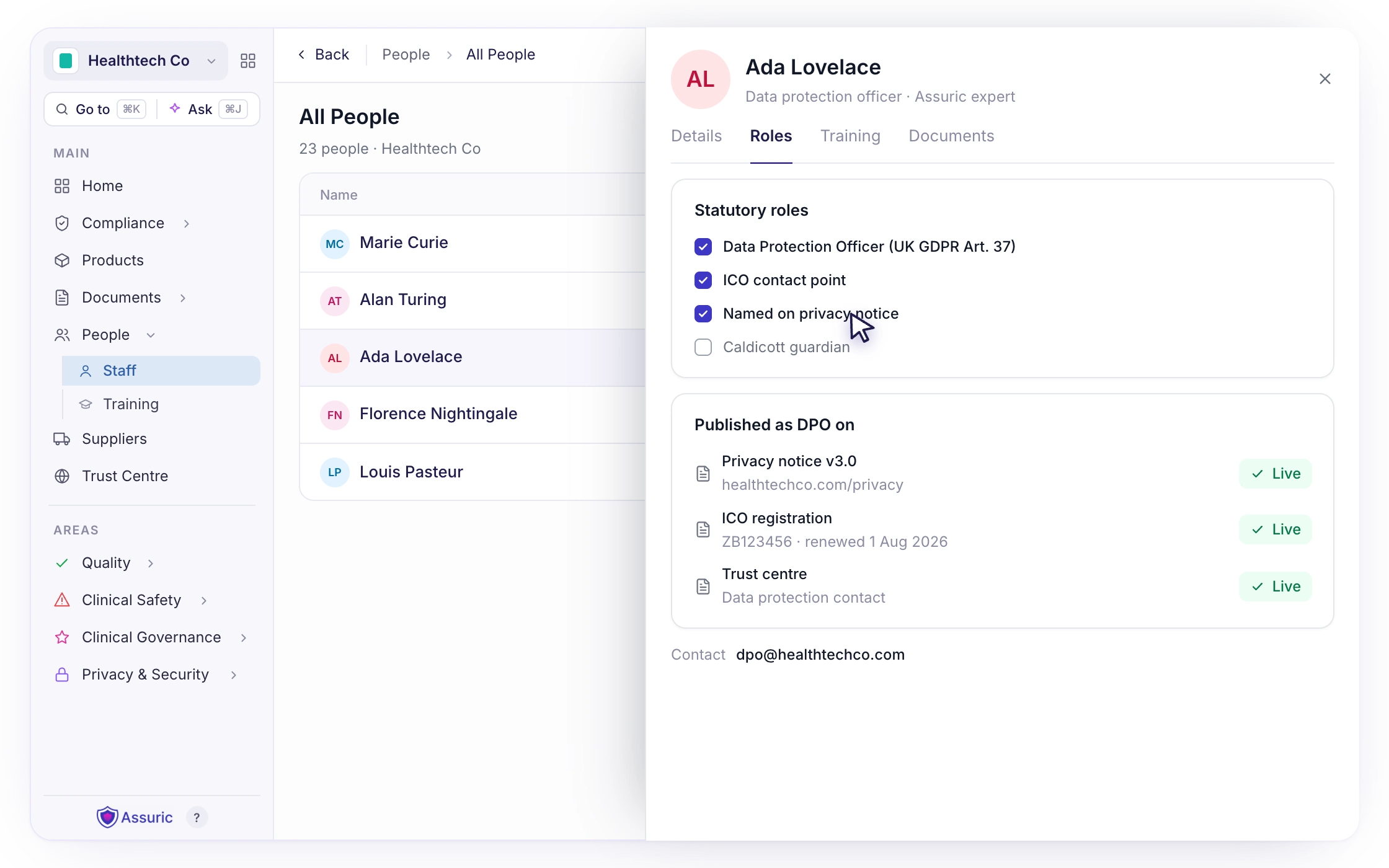
Your own experienced, named DPO who works directly in your Assuric workspace, supporting everything from DPIAs to stakeholder management and day-to-day data protection questions.
Trusted by dataprotection teams


Features
An experienced data protection specialist acts as your appointed DPO under UK GDPR, named on your documentation and your contact point with the ICO.
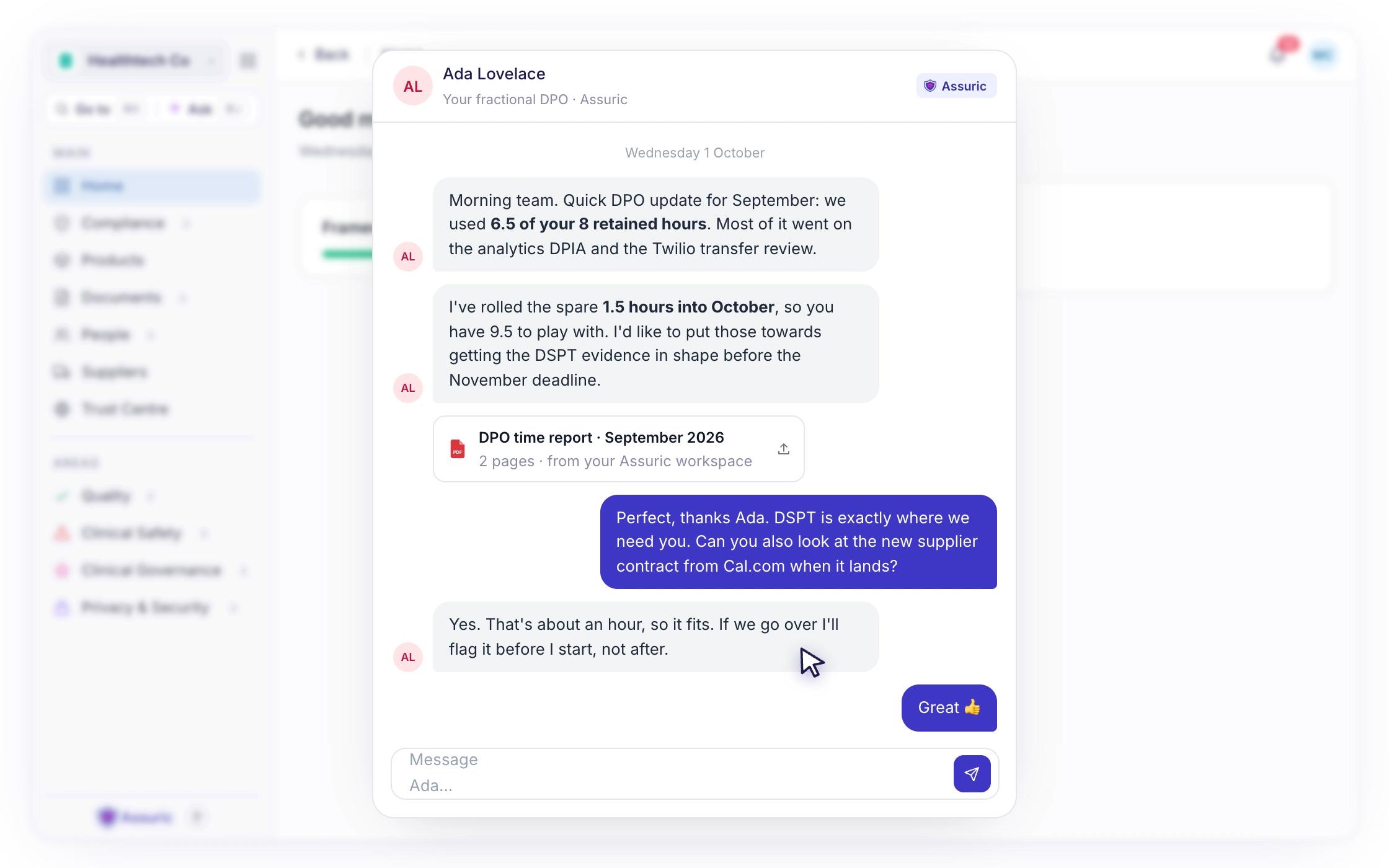
Choose a monthly retainer with regular check-ins, bring us in for a specific project such as a product launch or DPIA, or combine the two. Extra hours are agreed in advance and flagged before you go over.
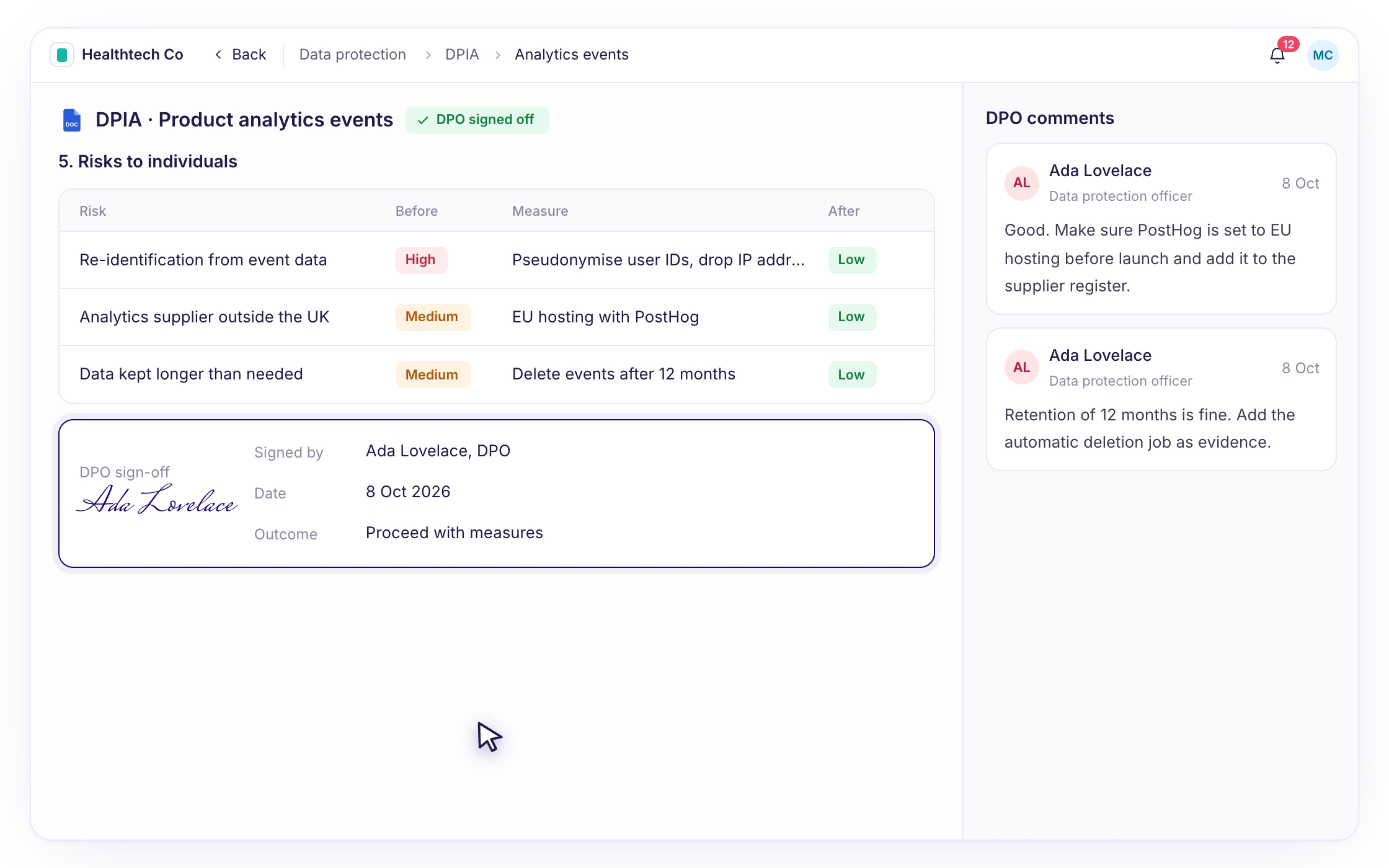
We help scope, complete and review DPIAs for new products, features and processing activities, and keep them current as things change.
We build and maintain your RoPA, draft data processing and data sharing agreements, review privacy notices, answer NHS and customer data protection questions, support subject access requests, and guide you through breach assessments and any reporting to the ICO.
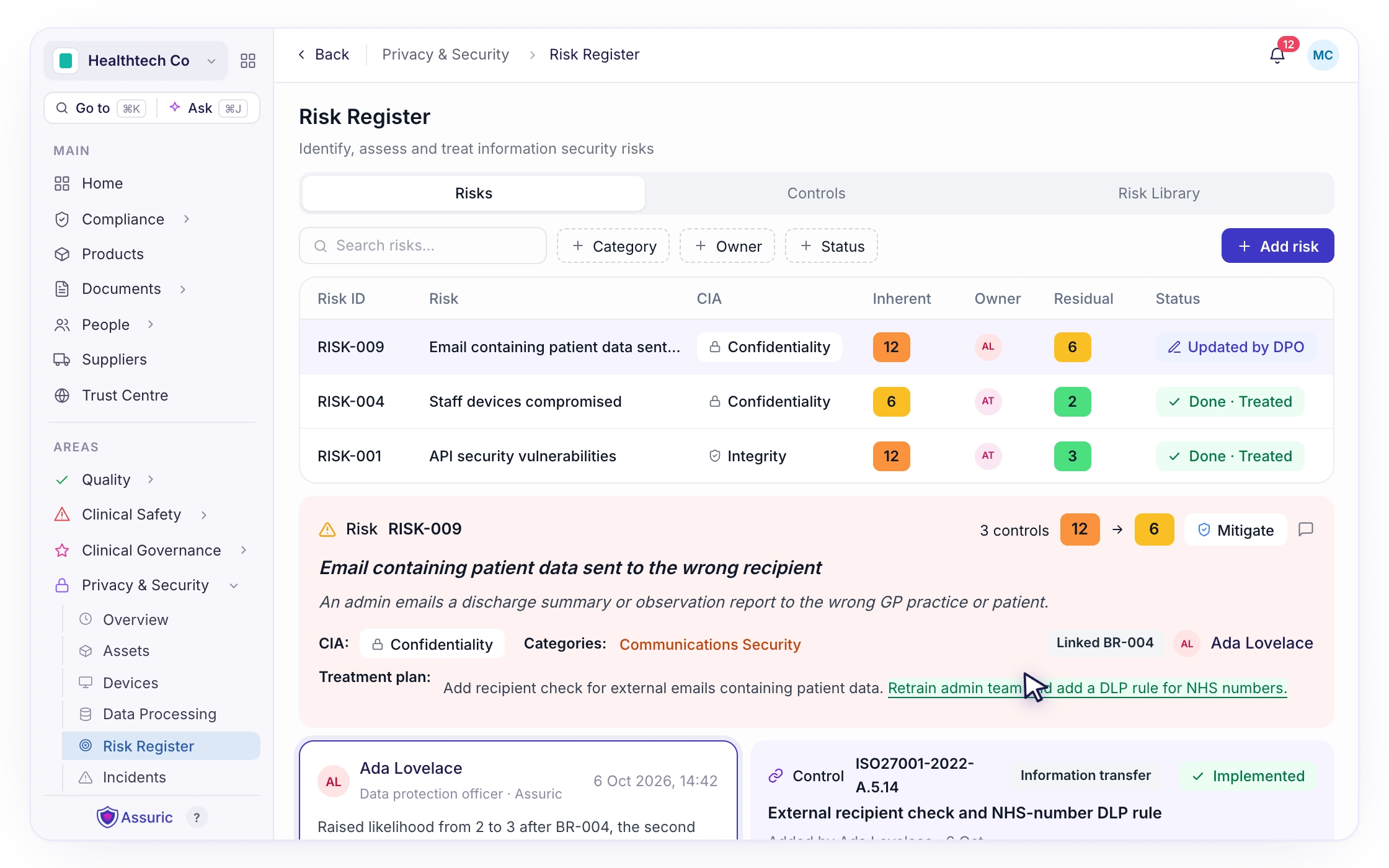
If you’re based outside the UK or EU but process personal data of people there, we can act as your UK or EU representative.
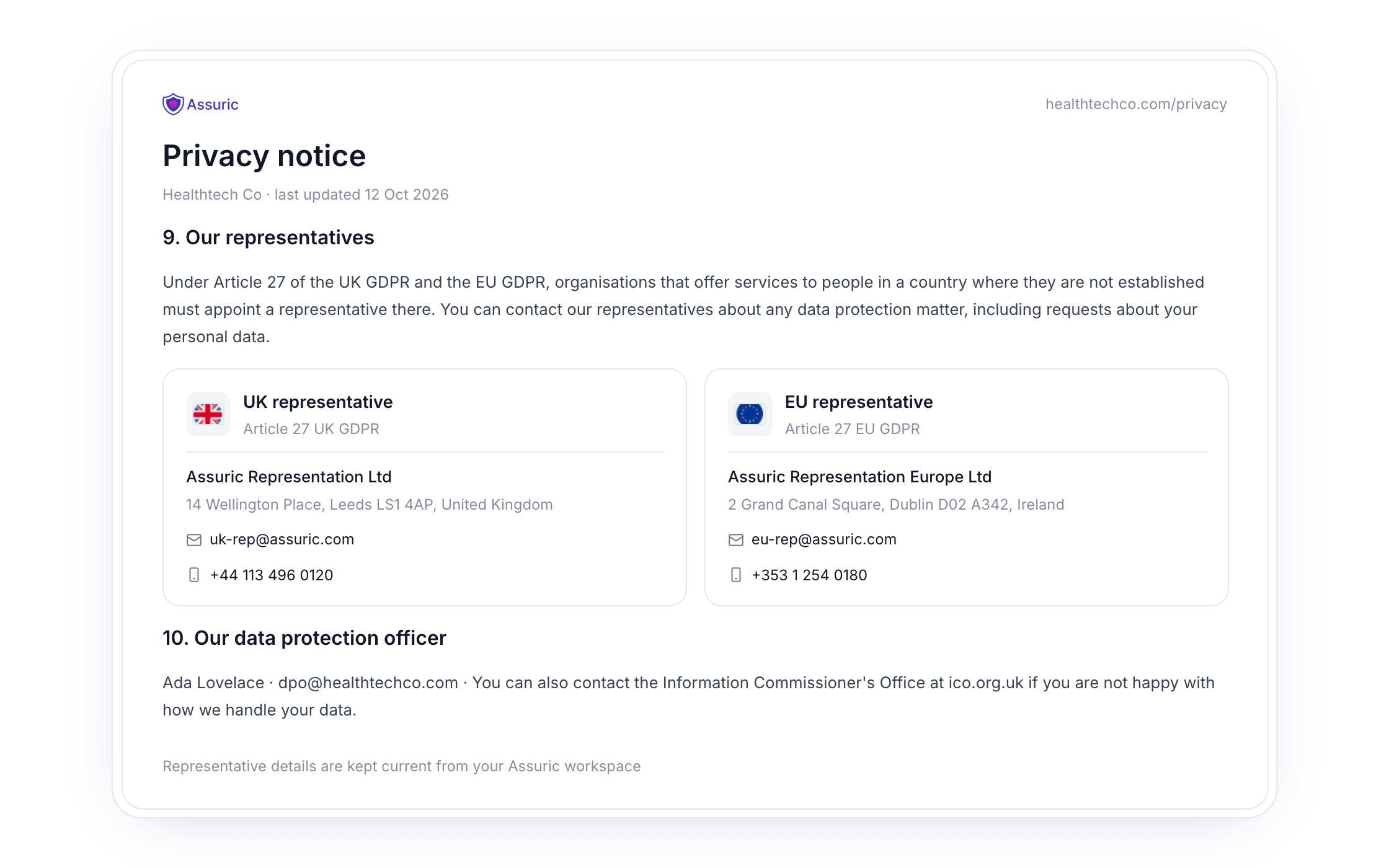
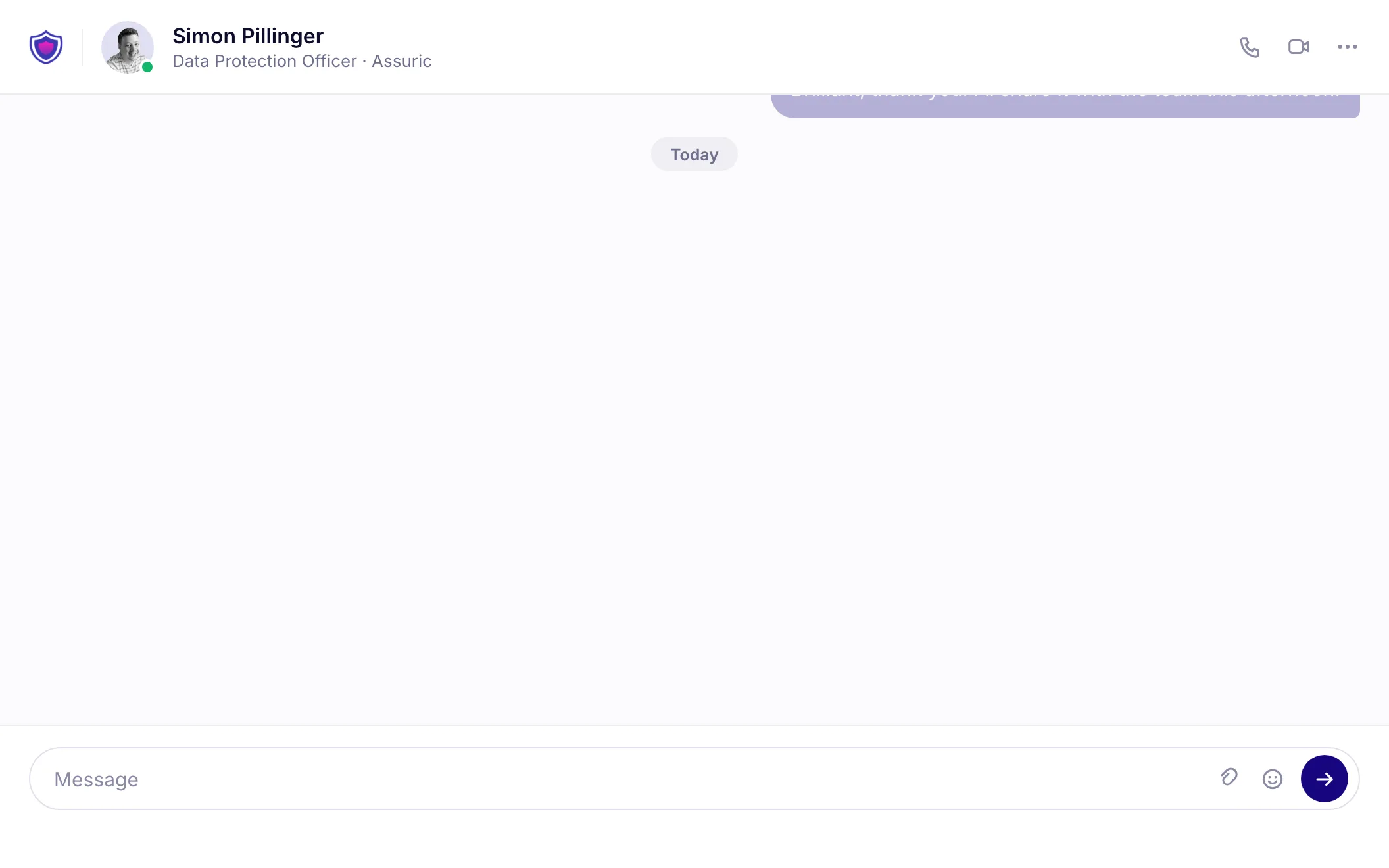
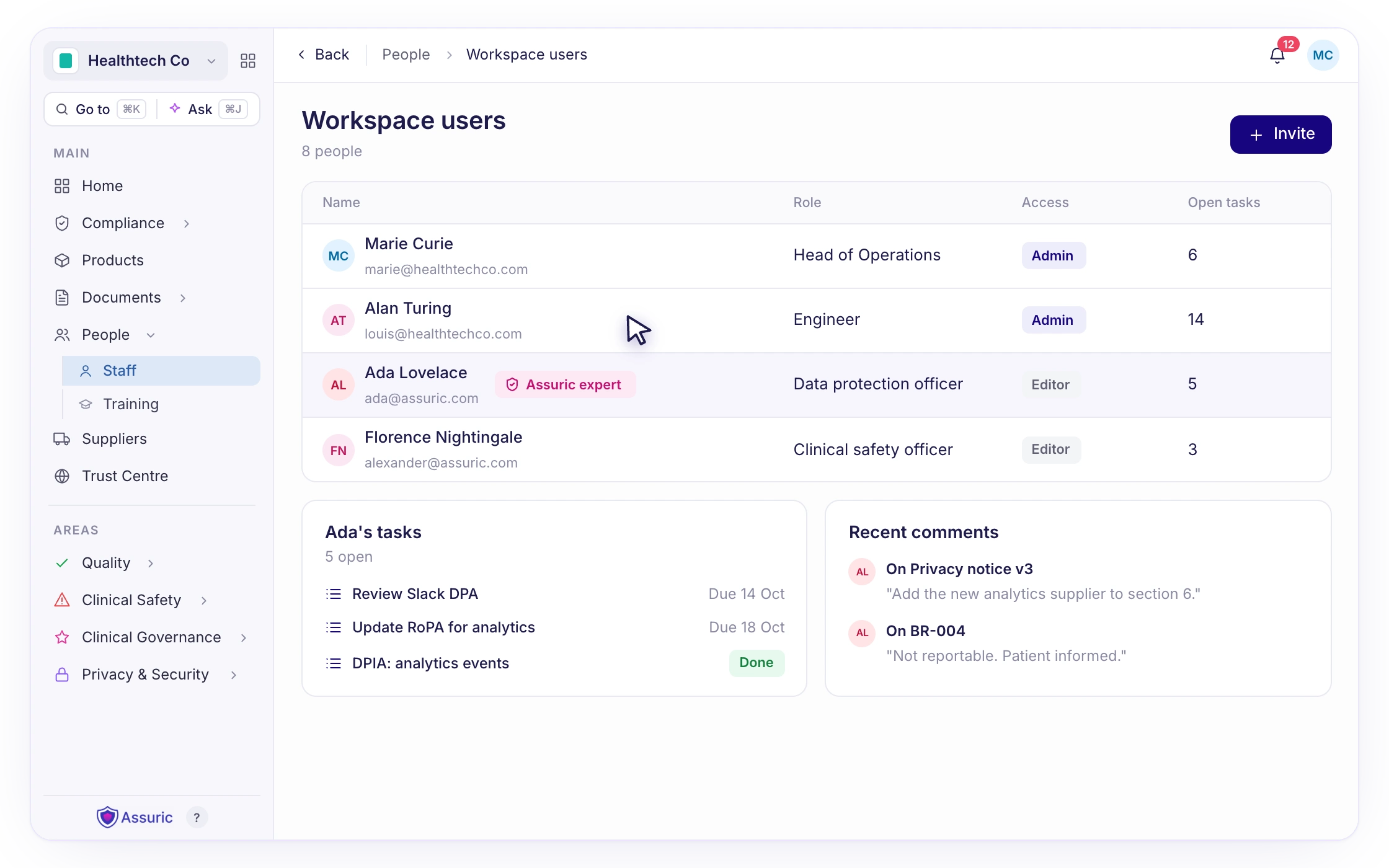
Your DPO is set up as a user in your workspace, so advice, documents, decisions and actions sit in one place alongside the rest of your compliance work, with nothing lost in email threads.
Benefits
Assuric’s AI and automation take care of the routine data protection work, so your DPO’s time goes on expert advice, not admin.
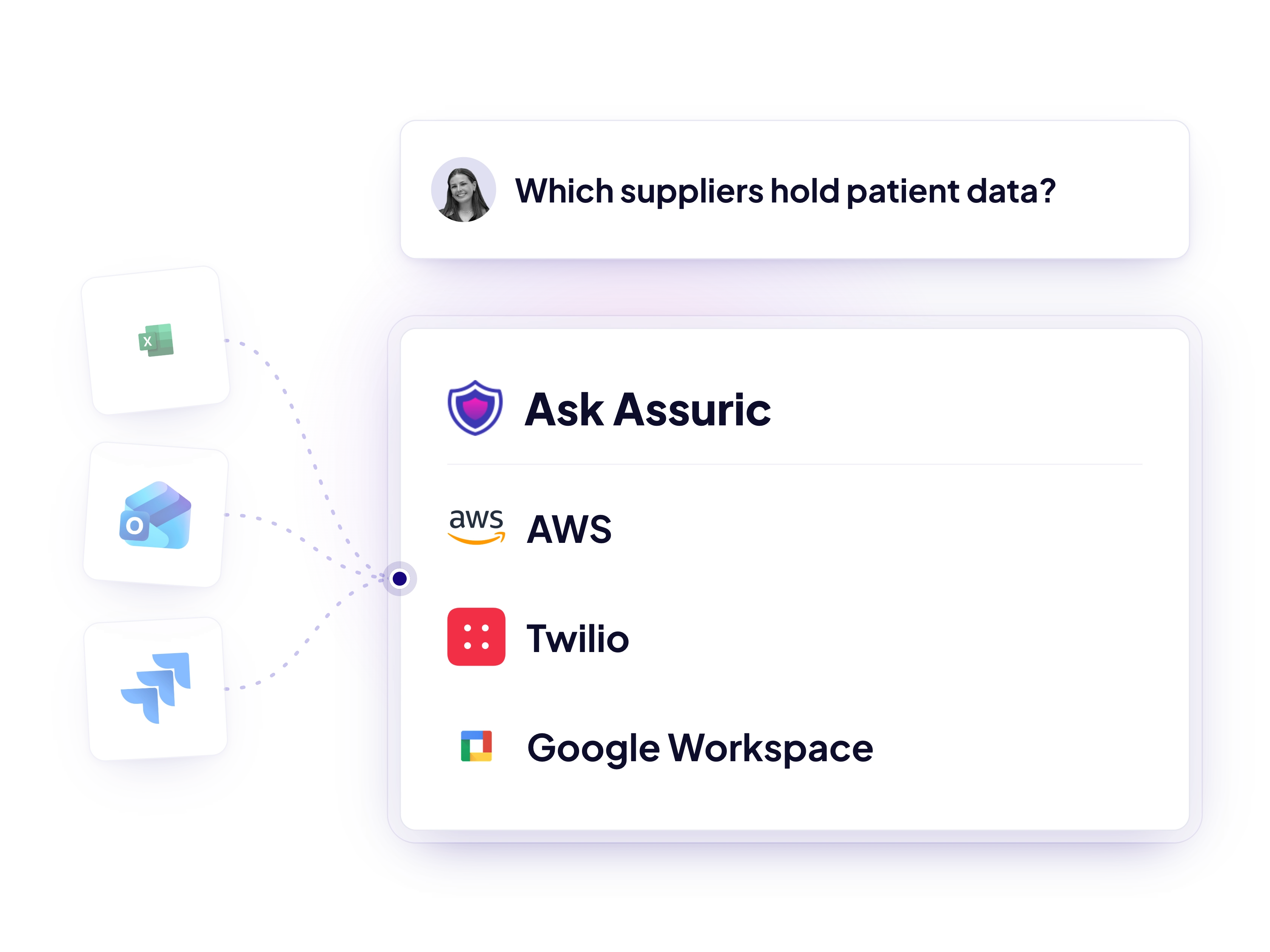
Have an expert on hand when NHS buyers, customers or partners ask about GDPR, DPIAs and data sharing, so you can answer quickly and with confidence.
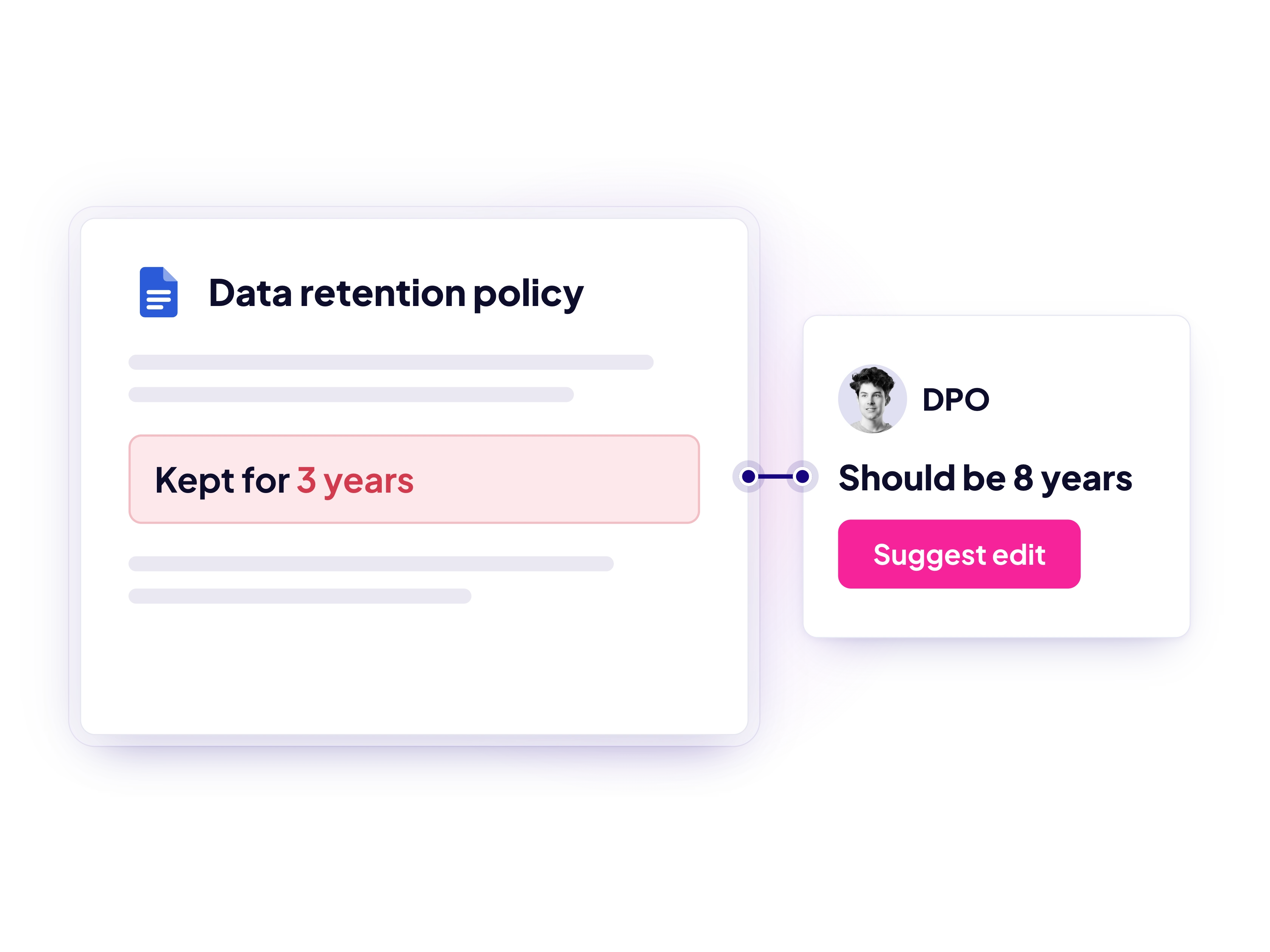
Hand the specialist data protection work to an expert, so your team can focus on building and running your service instead of researching GDPR requirements.
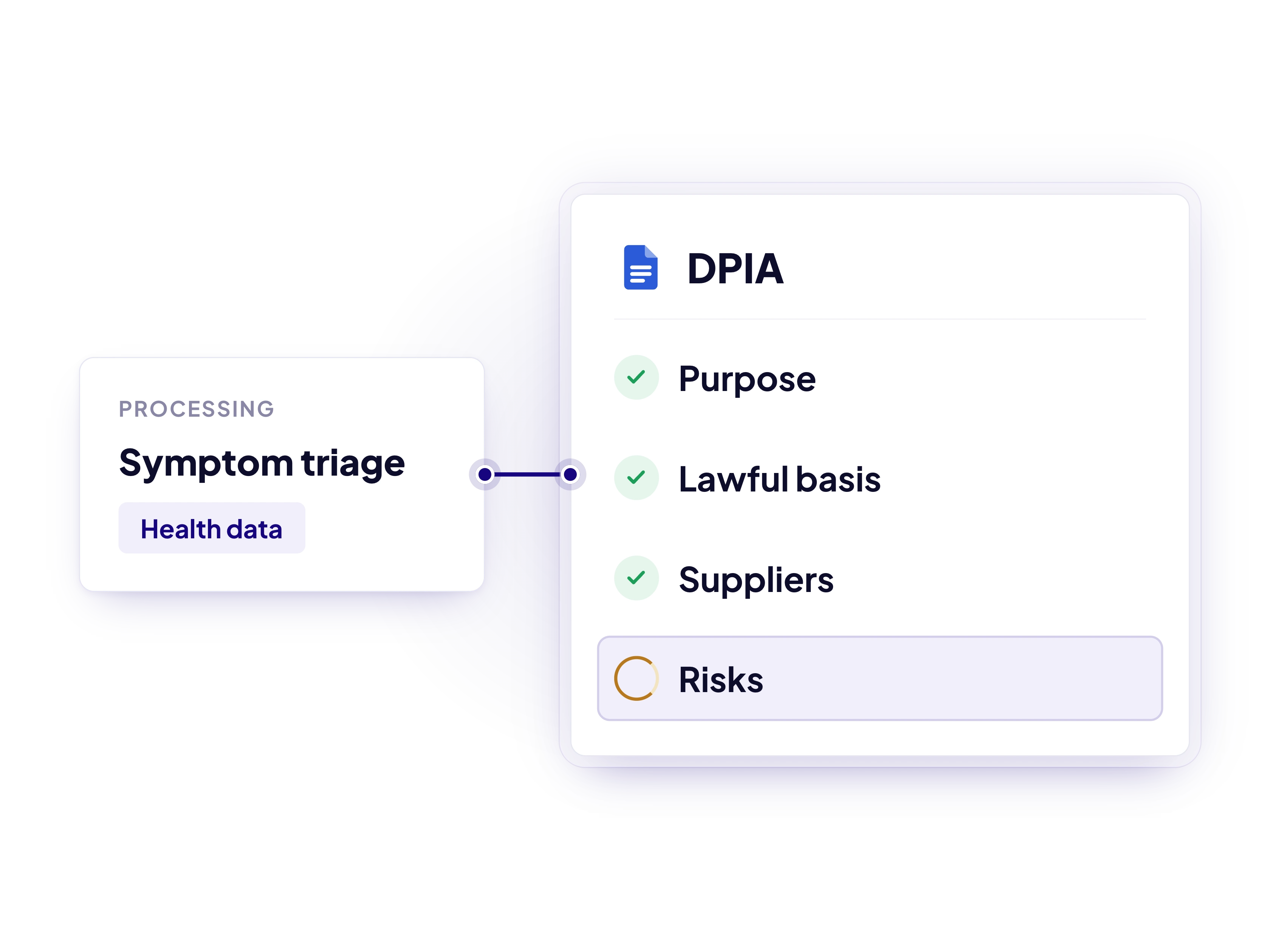
Expert eyes on new processing, DPIAs and breaches mean issues are spotted early and handled properly, before they reach a regulator.
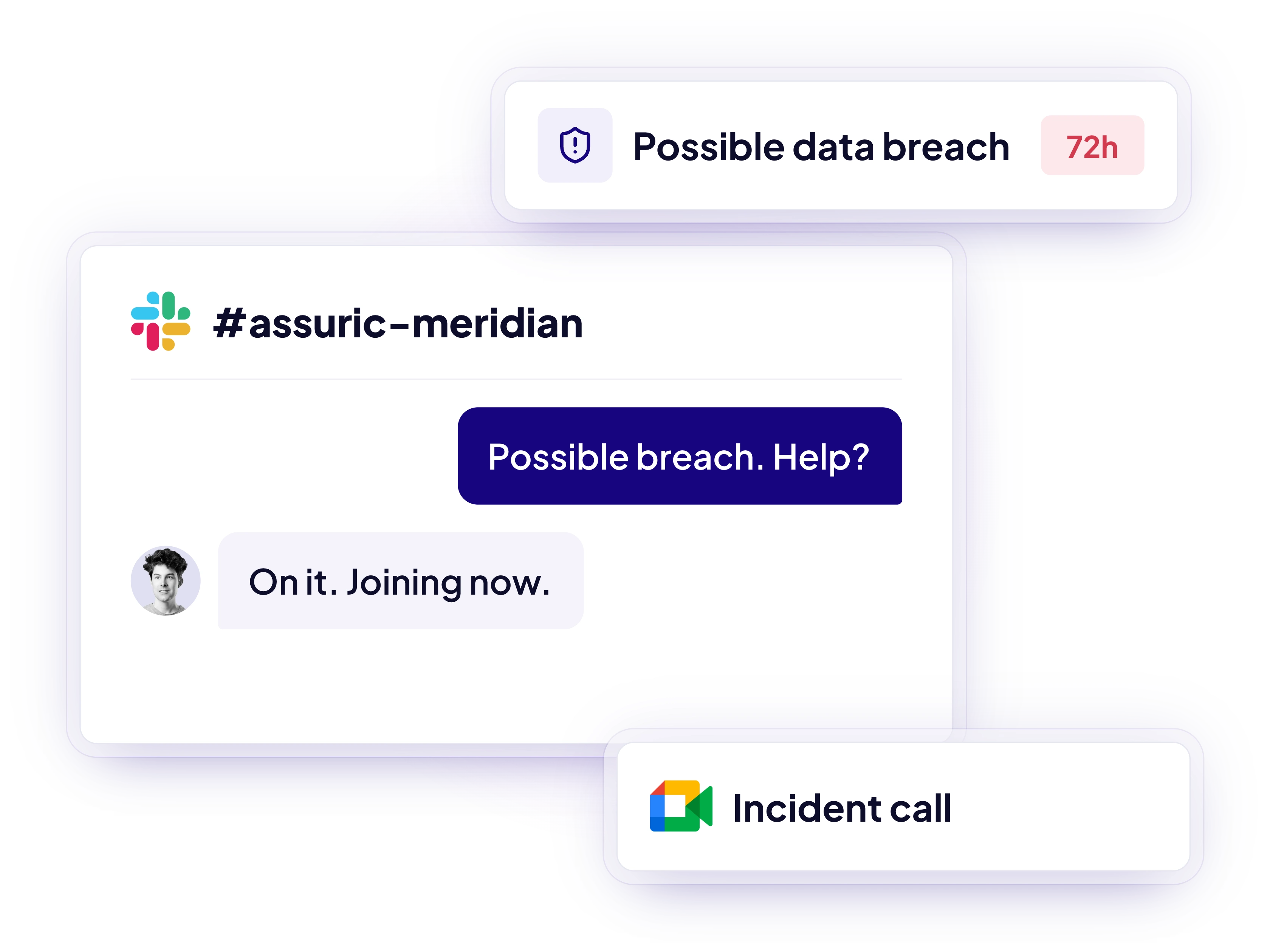
An expert keeps your policies, processes and records under review, and if there’s a breach or complaint, you have someone who knows your organisation and knows what to do.

“We couldn't speak highly enough of both the Assuric team and the platform itself, which is incredibly easy to use, and with the skill and hardworking nature of the Assuric team. They've been a key component in accelerating our progress and deployments!”
Maks Kozarzewski
COO, VitVio

“The Assuric platform is a game changer in the clinical risk management field. It has been carefully designed to make the job of a CSO significantly more streamlined. The team are excellent and responsive to any product suggestions I have requested, and it has been a pleasure to work with them.”
Paul Llewellyn
CCIO, Accenture

“Assuric has been fantastic in helping us quickly and safely navigate regulatory compliance in the UK. From completing Cybersecurity requirements to DSPT, DCB0129, and DTAC, the team was supportive, extremely knowledgeable, and the platform made everything quick and straightforward. A separate regulatory company we consulted at the beginning even remarked on how quickly we achieved compliance!”
Katie Baker
Director UK & Ireland, Tandem
Overlapping requirements and evidence are mapped across frameworks automatically, so you never do the same work twice.
The ICO says you must appoint one if you are a public authority, or if your core activities involve large-scale processing of special category data, such as health data, or large-scale, regular and systematic monitoring of individuals. That catches a good number of health technology companies, and NHS and enterprise buyers often expect one either way.
Yes, provided they have the expertise and can act without a conflict of interest. That’s hard in a small team, because the people who know the data best usually decide how it is used. If you’re not required to appoint a formal DPO, a smaller team may only need a data protection lead, who can be someone internal, ideally without a conflict of interest and with expert support available when they need it.
It can be either. UK GDPR allows you to appoint a member of staff, or an external DPO under a service contract, and an external DPO can be an individual or an organisation. Where an organisation provides the service, a named lead is assigned as your main contact, so you always know who to speak to.
Reviews your DPIAs, RoPA and privacy notices, advises on lawful basis and new processing, supports subject access requests, assesses breaches and reporting obligations, and answers your buyers’ data protection questions.
Time is set aside for your organisation each month, but that isn’t the only time your DPO is available. You can reach them whenever you need support, not just during set hours, and hours can be increased or decreased at any time, depending on your agreement.
Health data is special category data under UK GDPR, so you need an Article 9 condition as well as a lawful basis. Most processing of it is high risk, so DPIAs are usually required. Healthcare organisations also face NHS-specific requirements such as the Data Security and Protection Toolkit (DSPT), DTAC, the National Data Opt-out and the Caldicott principles. A DPO who knows the sector understands these requirements, and what NHS buyers expect to see.
A representative is your local point of contact for regulators and individuals when you’re not based where the people whose data you process are. If you’re based outside the UK but offer services to, or monitor, people in the UK, UK GDPR requires a UK representative. Likewise, a UK organisation serving people in the EU needs an EU representative. There is a narrow exemption for occasional, low-risk processing, but it doesn’t cover large-scale processing of health data. It’s a different role from a DPO, and we can provide both.
Contact your DPO straight away. They’ll help you contain it, assess the risk to the people affected, and decide whether it must be reported to the ICO, which has to happen within 72 hours of becoming aware of a reportable breach, and whether individuals need to be told. The decision and reasoning are recorded either way, so you can show how it was handled.
Yes. You can add the DPO service at any time, whether you’re just getting started with Assuric or have been using the platform for a while. Your DPO is set up in your existing workspace, so they can work from your records straight away.
Whether it’s a named DPO, project support or a UK or EU representative, we’ll find the right fit for you.


