Generate from a hazard log with AI and automation
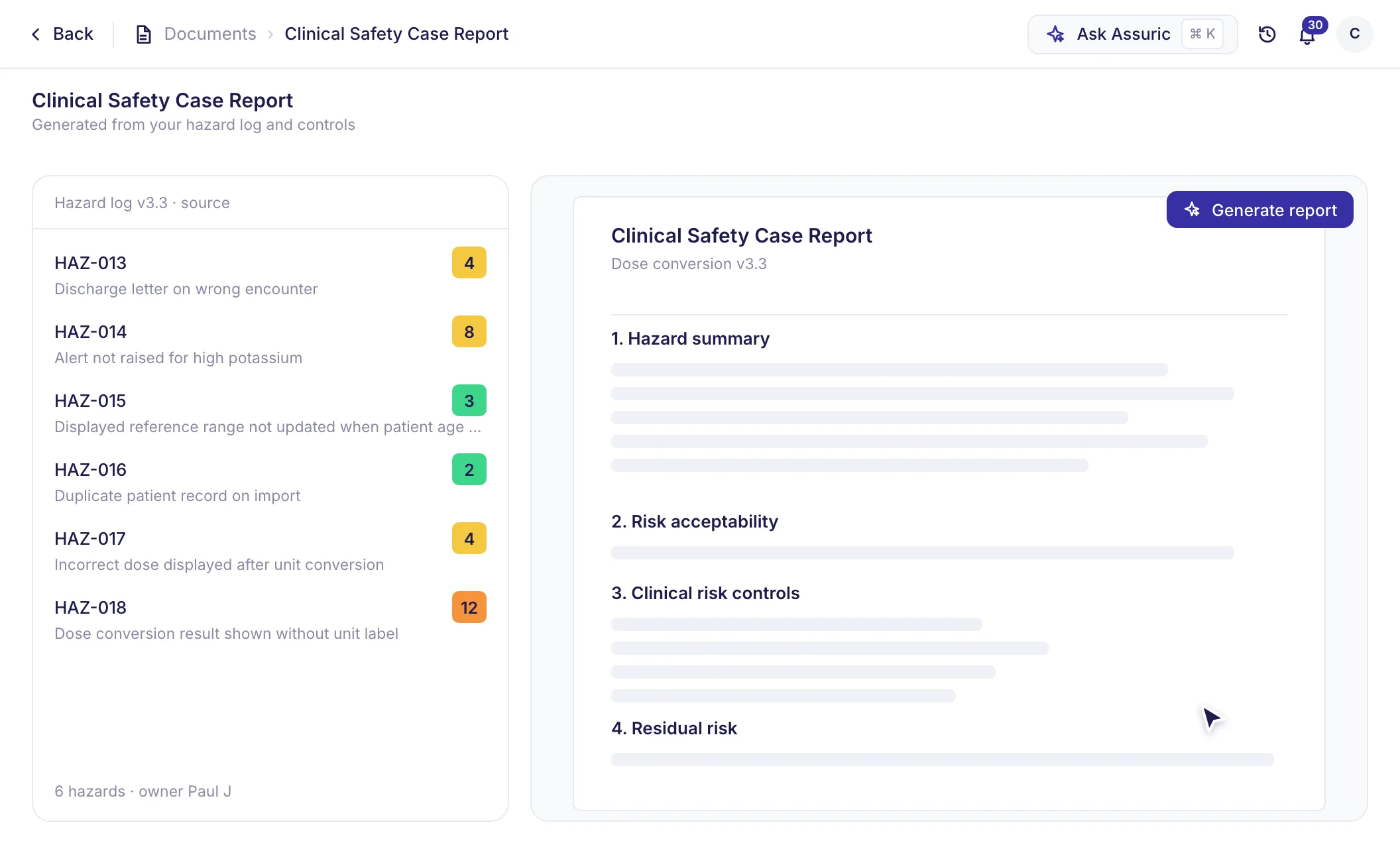
Your CSCR is built directly from your live hazard log, with AI and automation pulling in hazards, causes, controls, evidence and residual risk, so every report reflects your current product release.
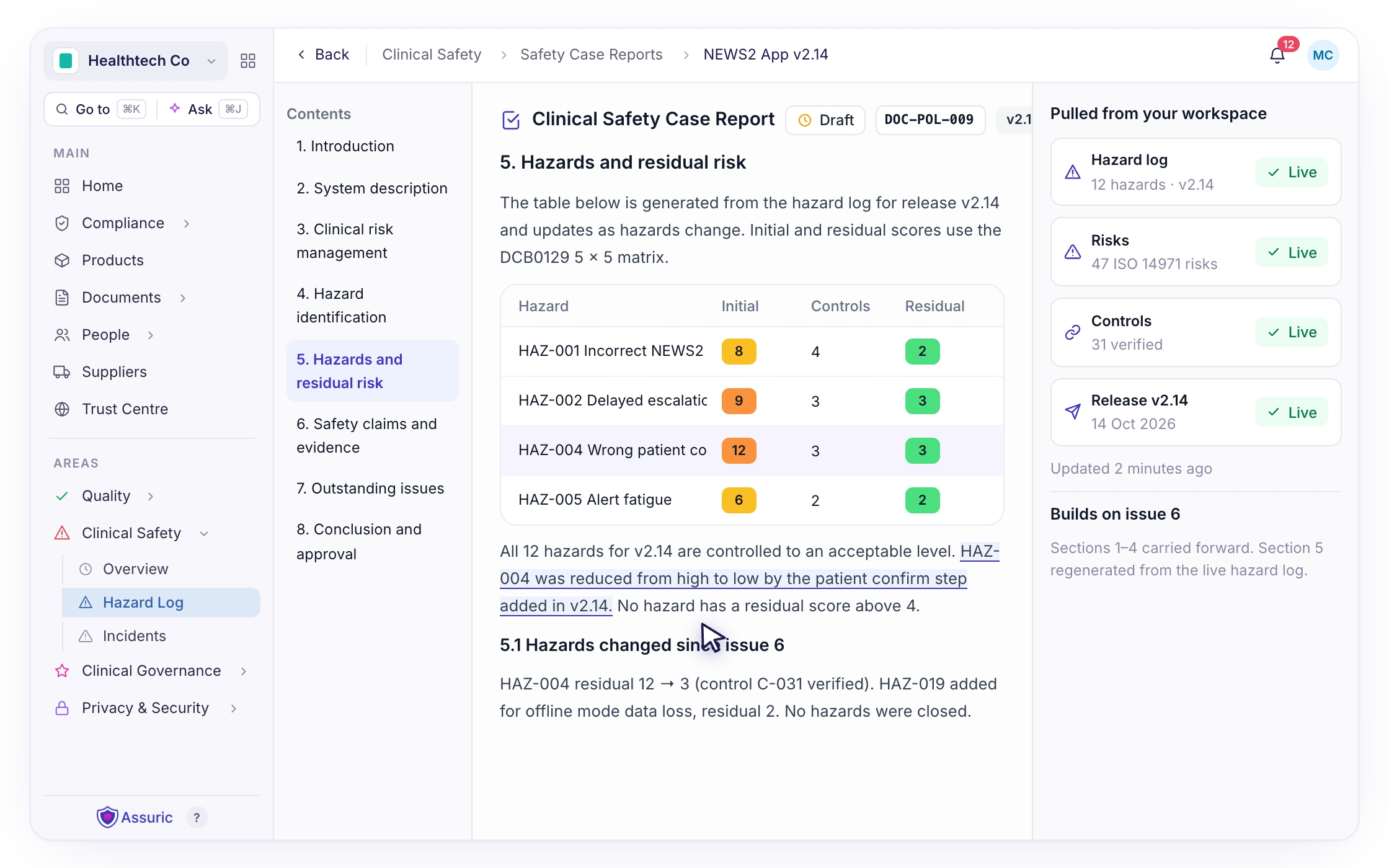
Generate complete clinical safety case reports (CSCRs) straight from your live hazard log, in the structure reviewers expect, ready for reviews and approvals.
Trusted byclinical safety teams


Features
Your CSCR is built directly from your live hazard log, with AI and automation pulling in hazards, causes, controls, evidence and residual risk, so every report reflects your current product release.
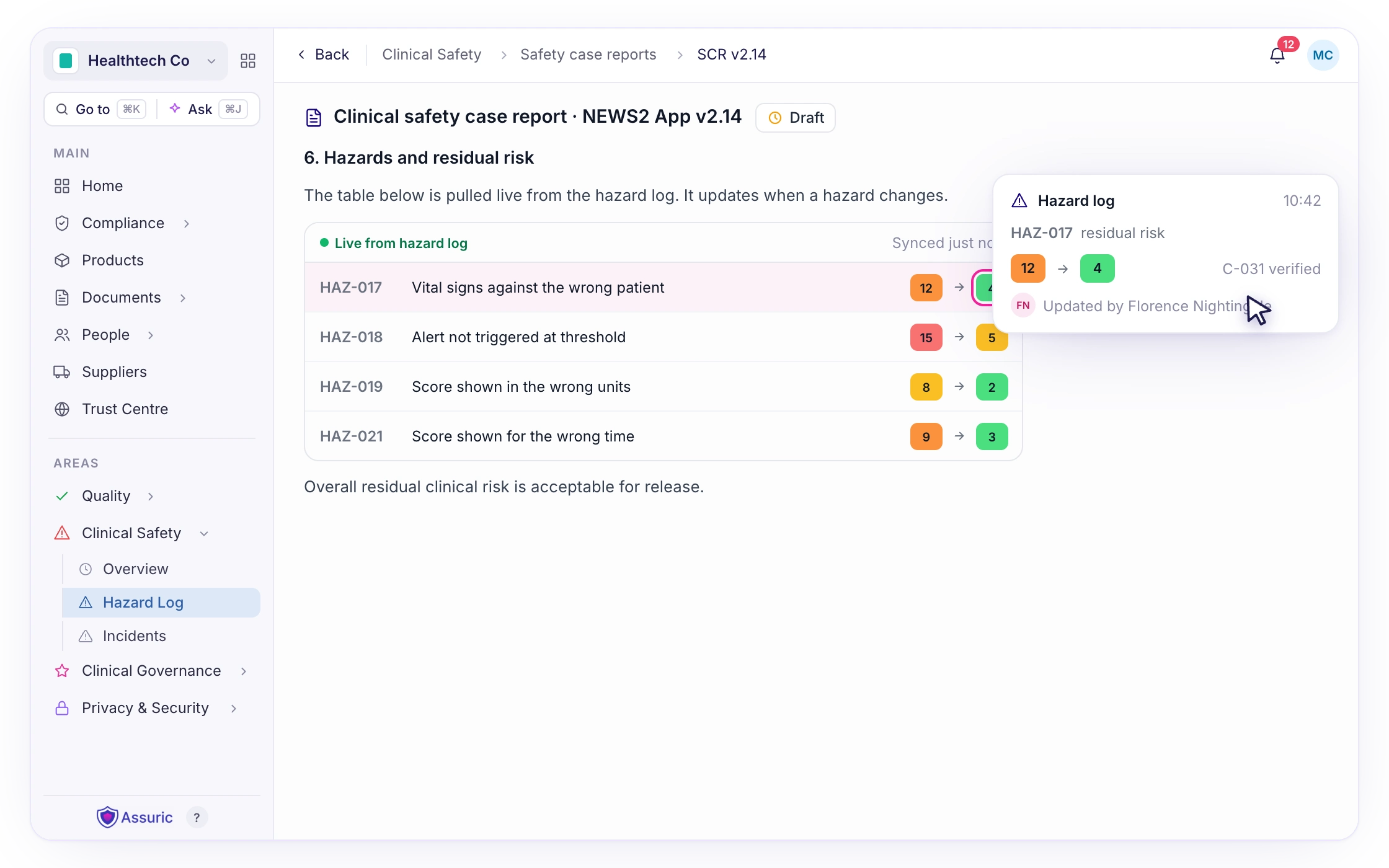
Live placeholders show hazard log data directly in your report and stay in sync as it changes, so there’s no copying, pasting or chasing out-of-date figures.
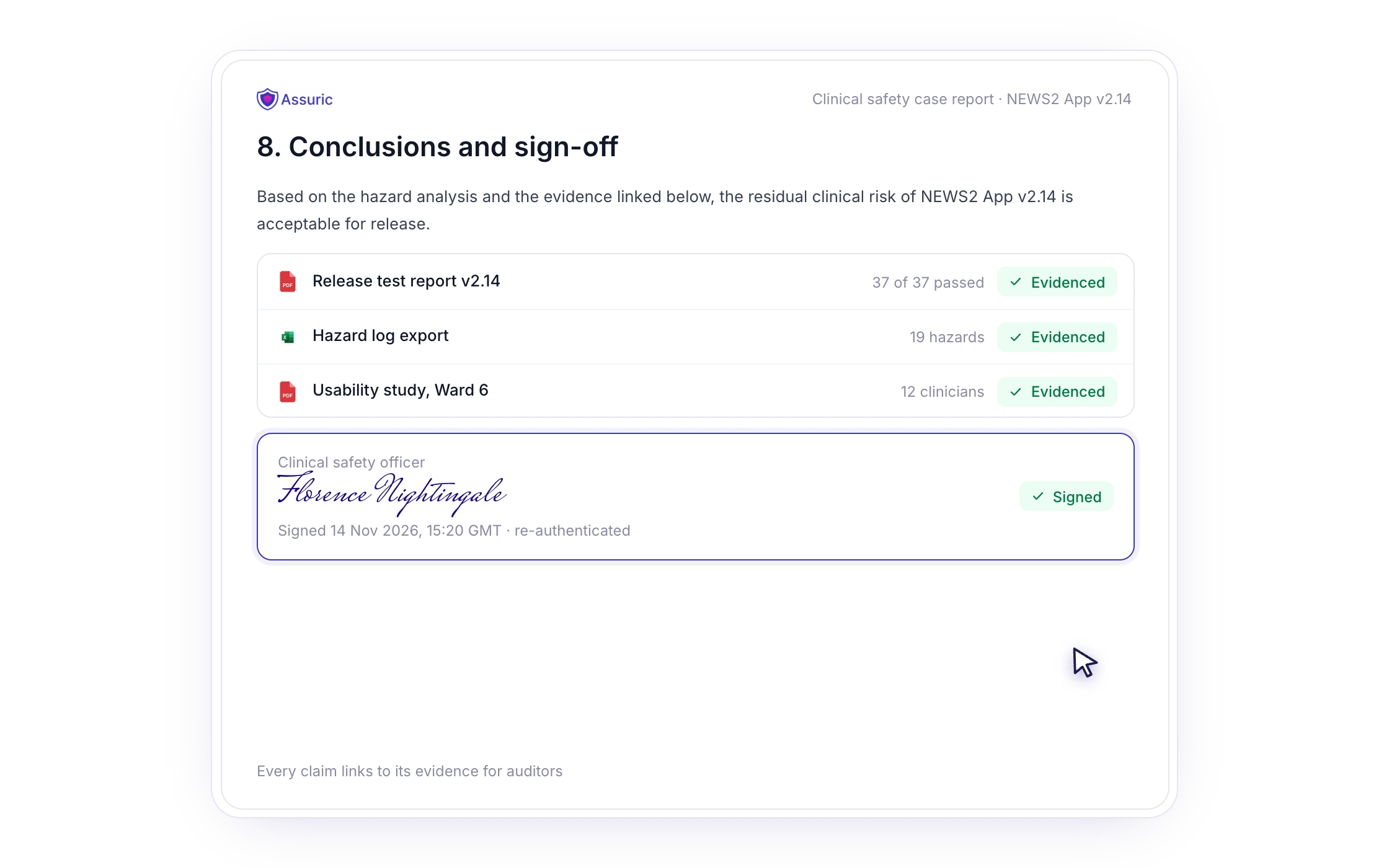
Every issue is version controlled, with review and approval cycles so your Clinical Safety Officer signs off each report before it’s issued, and a full history of what changed and who changed it.
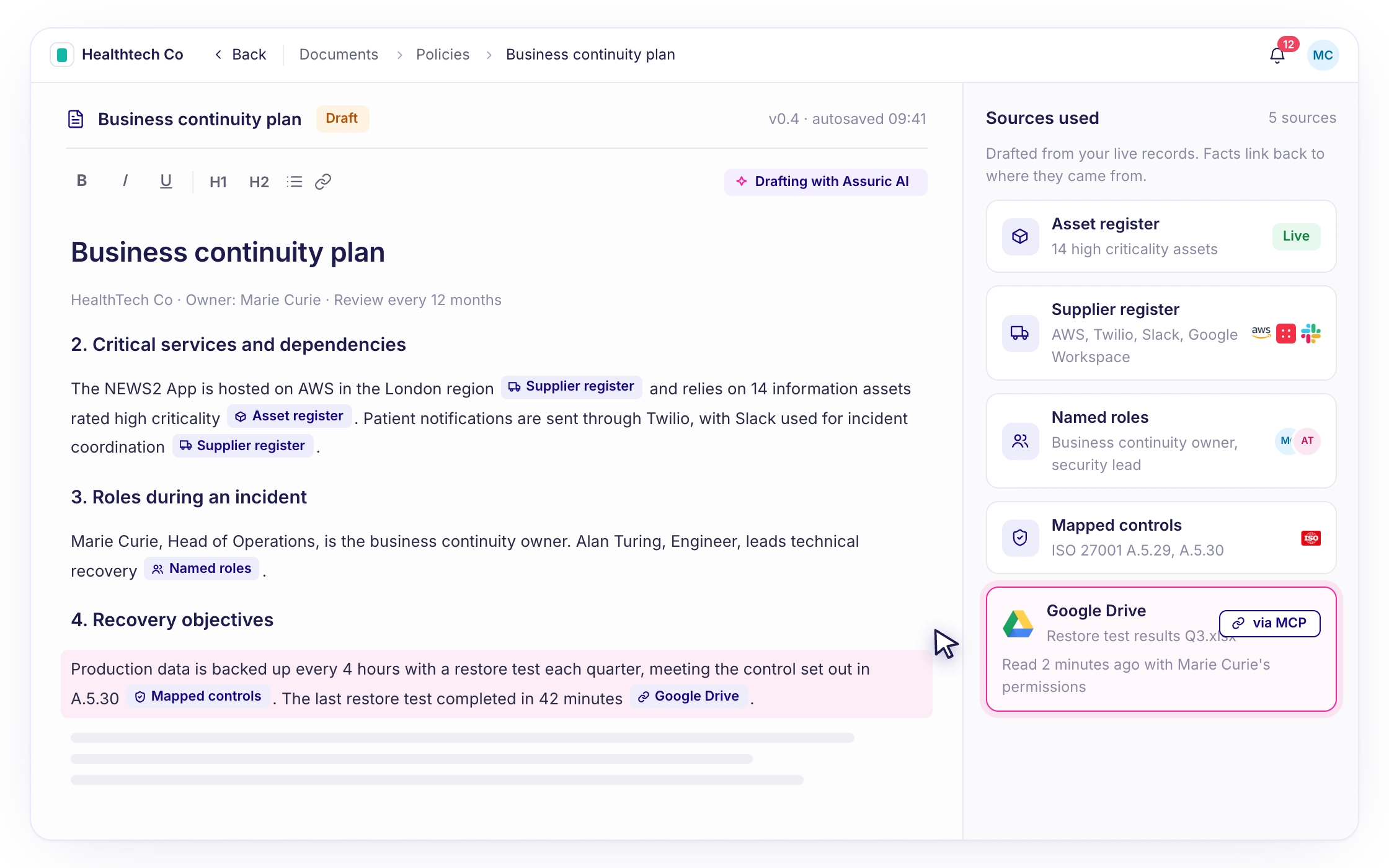
Our AI-native document editor drafts new sections and updates existing ones using everything in your workspace, from your hazard log to your policies and product information, with you in control of every change.
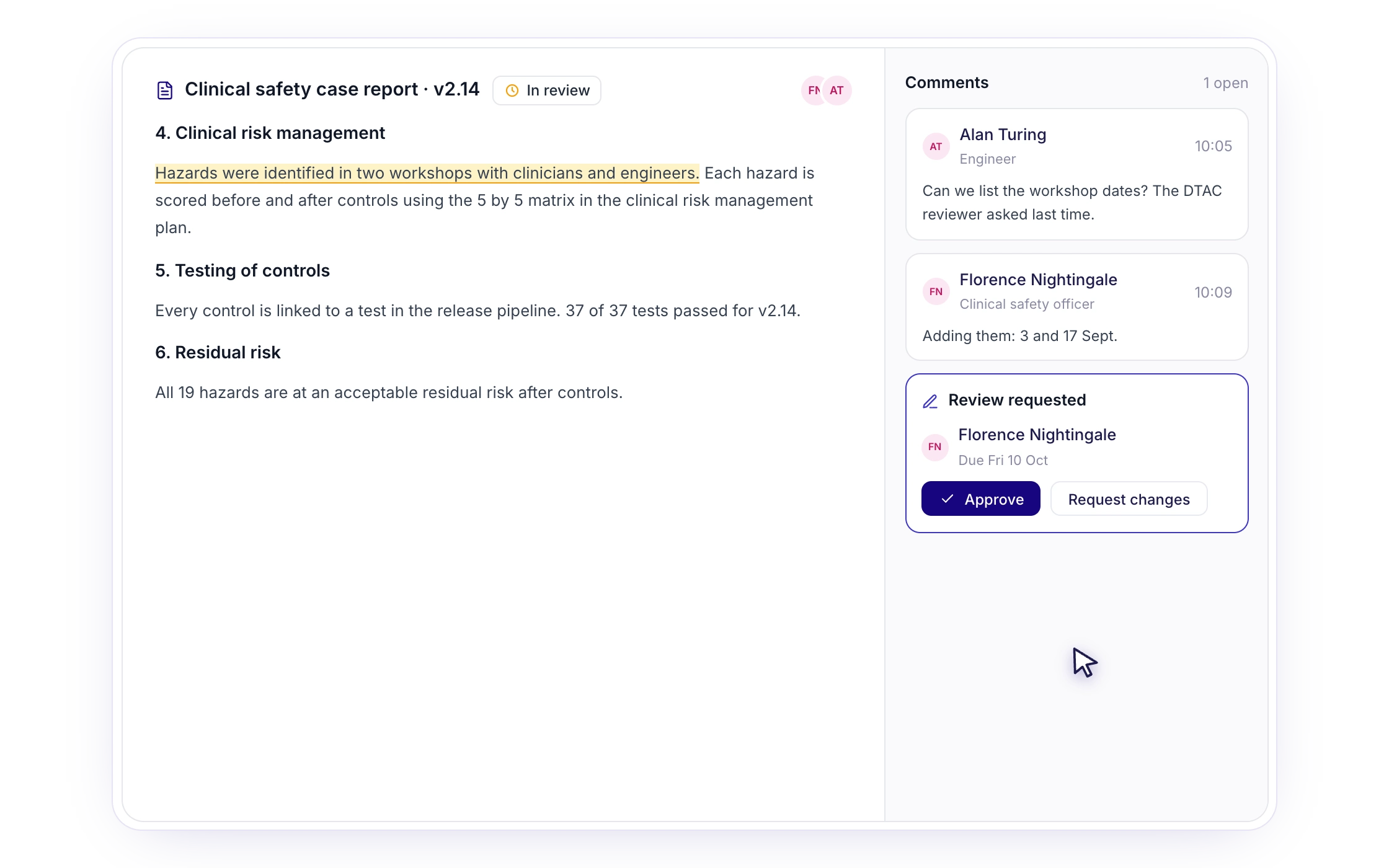
Bring your team, your Clinical Safety Officer and other reviewers into the same document, with comments and discussion kept alongside the report rather than in email threads.
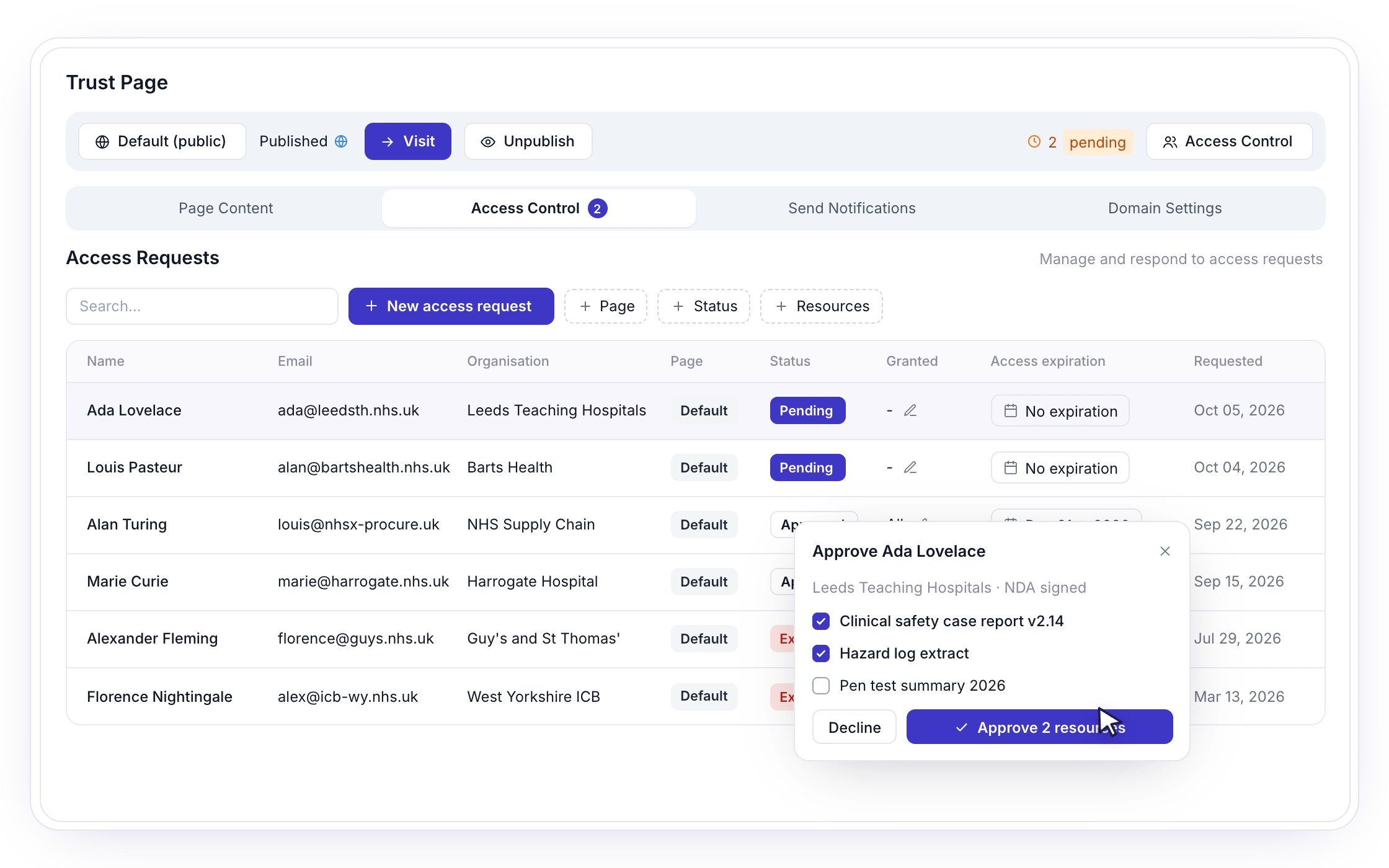
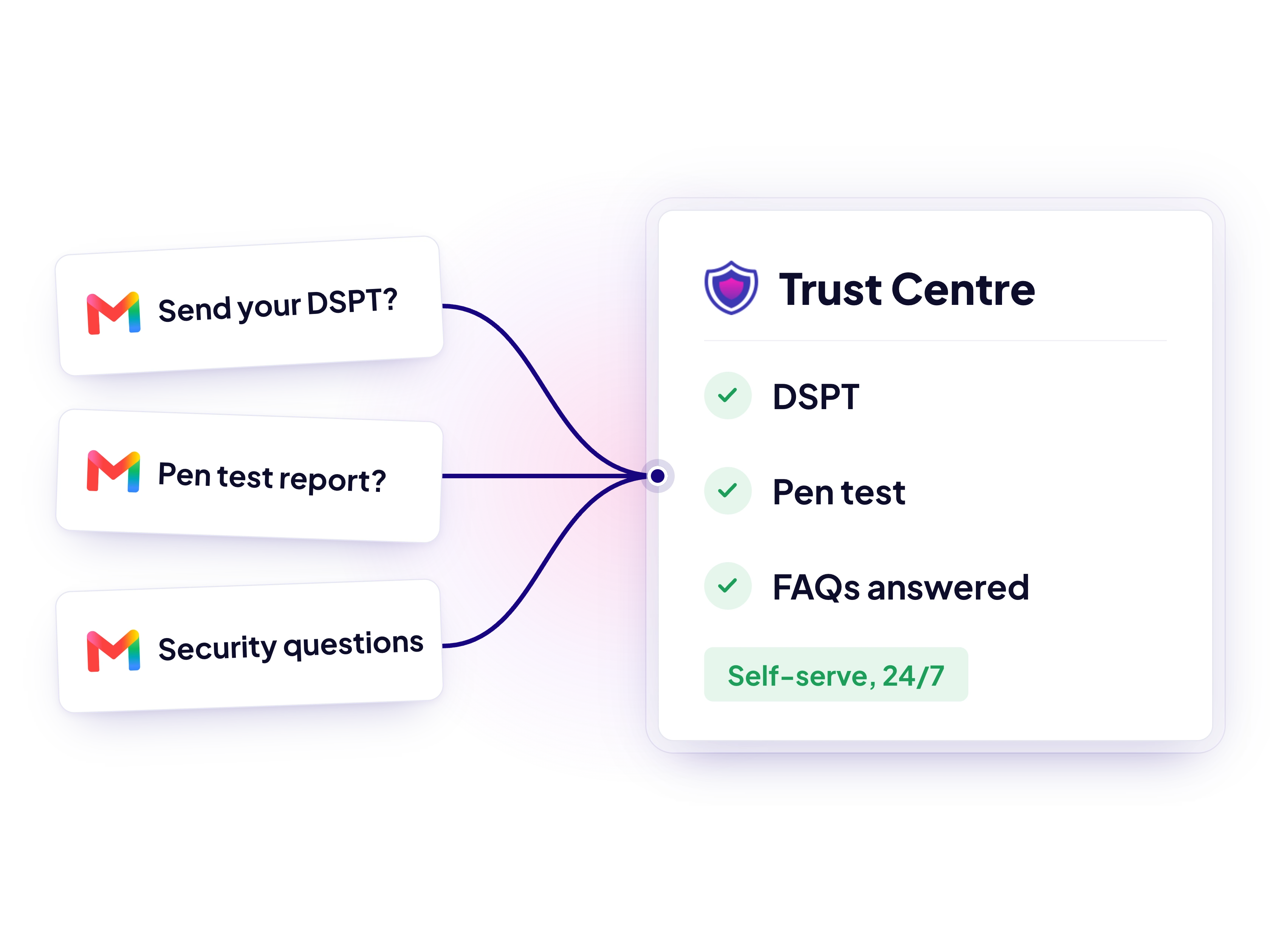
Share approved reports with NHS buyers and deploying organisations through your Trust Centre. When a new version is approved, it can update automatically, with the relevant stakeholders notified.
Benefits
Reports are generated from your hazard log and stay in sync through live placeholders, so a new issue takes minutes, not days of copying and pasting.
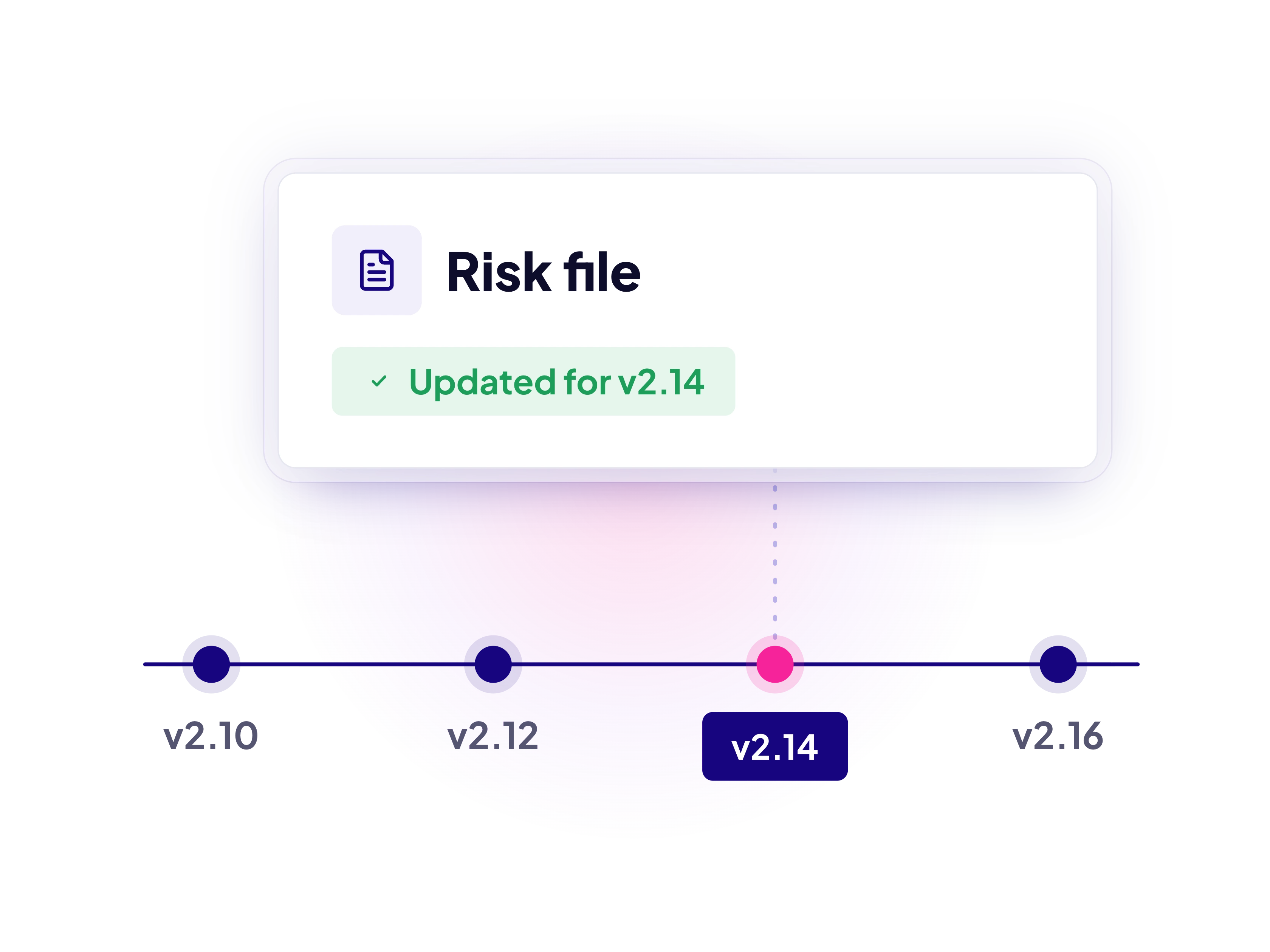
Every issue, review and approval is versioned against its release, so you can show DTAC reviewers and NHS buyers exactly how your clinical risk has changed.
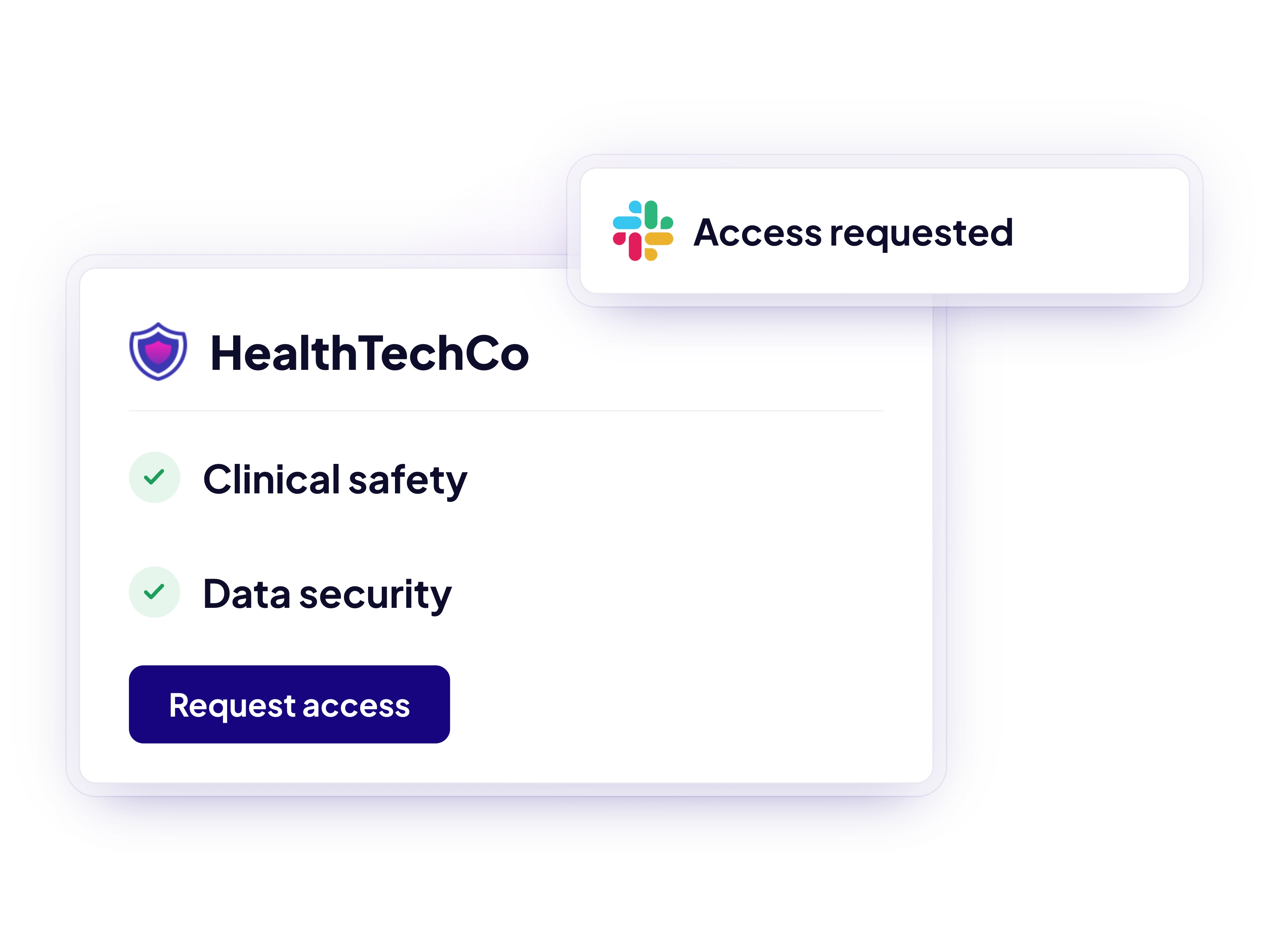
Share an up-to-date, CSO-approved safety case with NHS buyers and deploying organisations whenever they ask, with updates sent automatically.
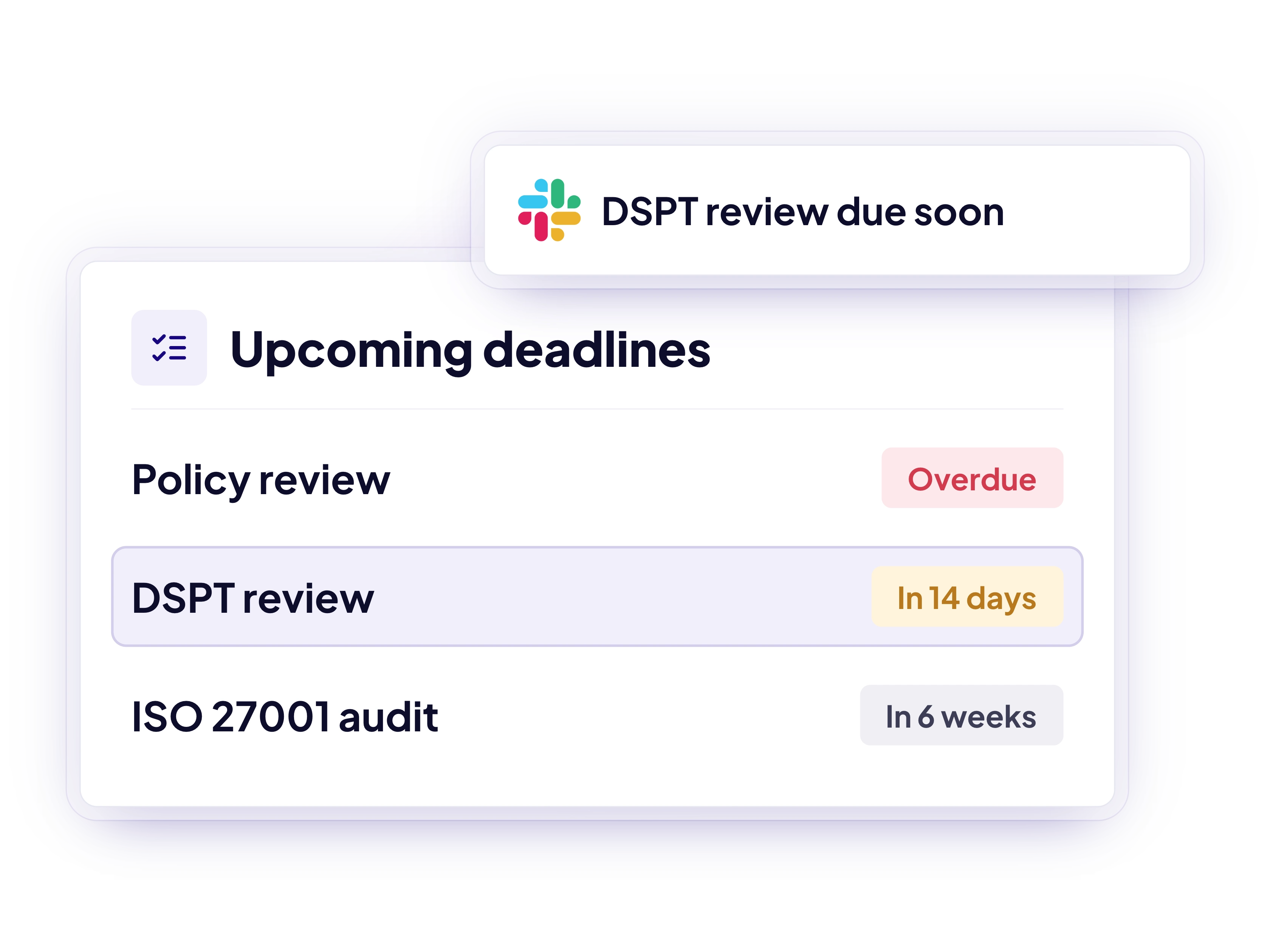
Notifications and emails tell you what’s due, what’s overdue and what’s waiting on someone else, so nothing quietly expires.
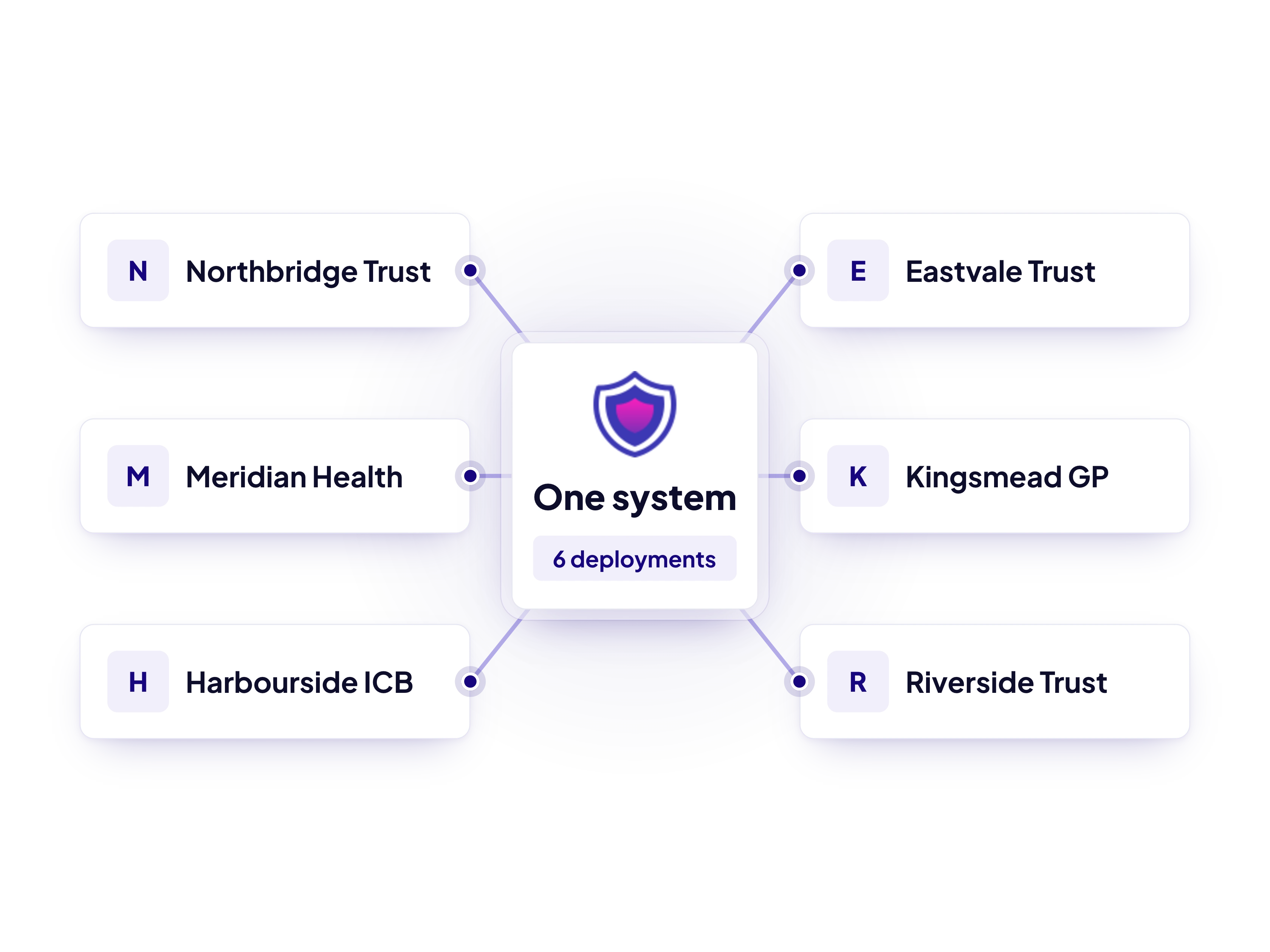
See every safety case, its status and its next review in one place, so nothing ships without an up-to-date, signed-off assessment.

“We couldn't speak highly enough of both the Assuric team and the platform itself, which is incredibly easy to use, and with the skill and hardworking nature of the Assuric team. They've been a key component in accelerating our progress and deployments!”
Maks Kozarzewski
COO, VitVio

“The Assuric platform is a game changer in the clinical risk management field. It has been carefully designed to make the job of a CSO significantly more streamlined. The team are excellent and responsive to any product suggestions I have requested, and it has been a pleasure to work with them.”
Paul Llewellyn
CCIO, Accenture

“Assuric has been fantastic in helping us quickly and safely navigate regulatory compliance in the UK. From completing Cybersecurity requirements to DSPT, DCB0129, and DTAC, the team was supportive, extremely knowledgeable, and the platform made everything quick and straightforward. A separate regulatory company we consulted at the beginning even remarked on how quickly we achieved compliance!”
Katie Baker
Director UK & Ireland, Tandem
It sets out your product’s intended use, the clinical hazards you have identified, the controls reducing each one, and your reasoned judgement that the remaining risk is acceptable. DCB0129 requires manufacturers of health IT to produce and maintain one, and NHS organisations ask for it during procurement and DTAC. In Assuric it is generated from your hazard log, so the two never drift apart.
Your named CSO, who must be a suitably qualified clinician. They do not have to be an employee. Assuric’s fractional CSO service can hold the role and sign the report as your named CSO.
Whenever your clinical risk position changes, which in practice means significant releases, new hazards and clinical safety incidents. You can also set a custom review date based on your internal timelines. Live placeholders and version control make each new issue quick to produce.
DCB0129 is the manufacturer’s safety case for the product itself. DCB0160 is the deploying organisation’s safety case for using it in their particular setting. If you supply software to the NHS you produce the DCB0129 one, and your customers produce theirs.
Yes. Our fractional CSO service can complete the process end to end, on a one-off project or monthly retainer basis, depending on what you need.
Yes. Share approved reports through your Trust Centre, and when a new version is approved it can update automatically, with the relevant stakeholders notified.
Yes. Assuric’s AI can import your existing hazard log, and we can run a dedicated migration of your safety case and supporting documents during onboarding.
Yes. Reports can be exported at any time in a range of formats, including NHS-style templates.
Yes. Manage safety cases for every product and deployment in one place, under both DCB0129 and DCB0160, and reuse shared hazards and controls rather than starting again.
See how Assuric can help you manage your safety cases, hazard logs, incidents and more, all in one place.