Nothing missing on submission
Registration requires a specific set of policies and documents, and an incomplete application is the most common reason for delay. Your workspace arrives with the whole set, tailored to you.
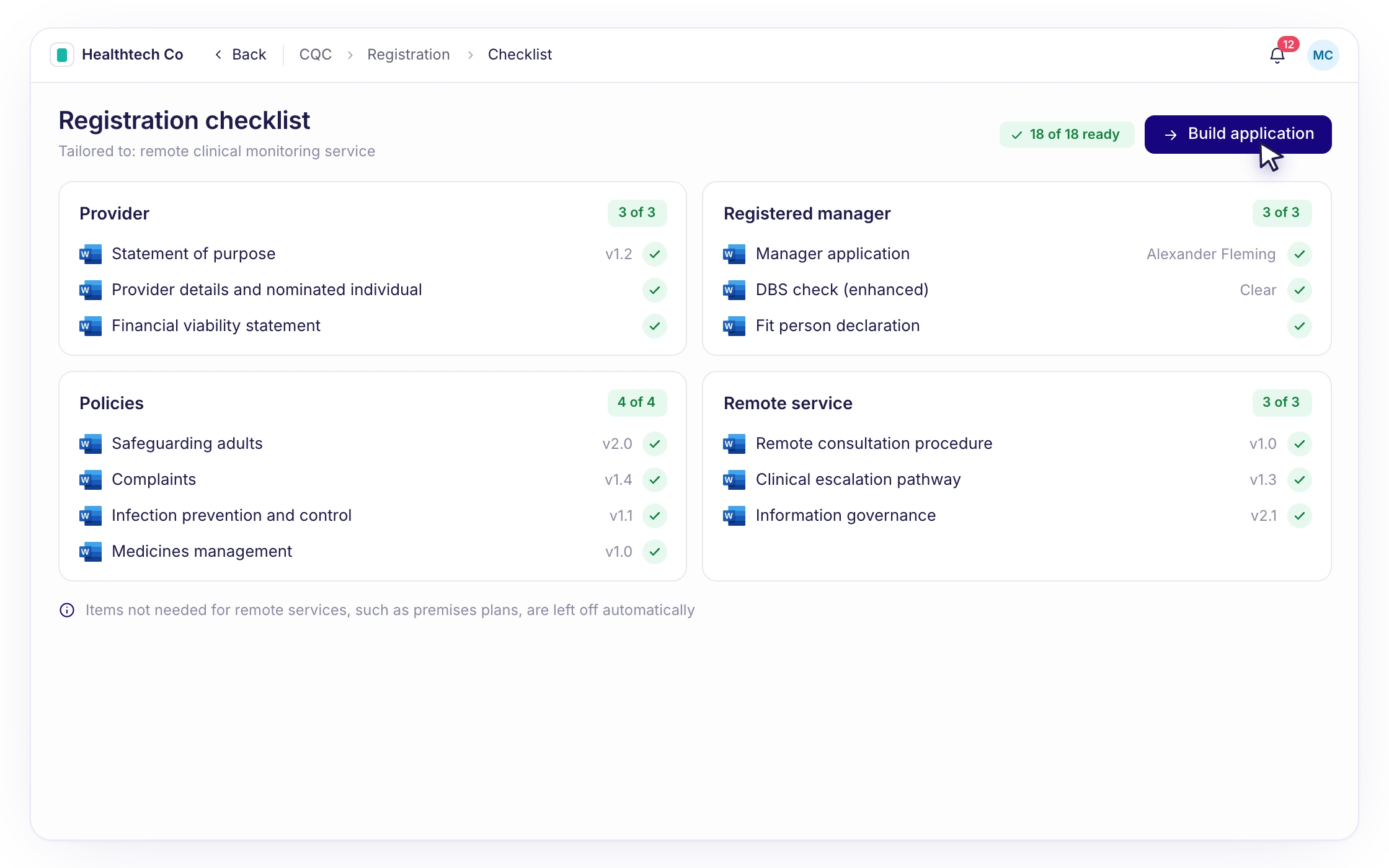
Every document, role and form the CQC asks for, prepared and reviewed before submission. Incomplete applications are the most common cause of delay.
Trusted byclinical teams


Features
Registration requires a specific set of policies and documents, and an incomplete application is the most common reason for delay. Your workspace arrives with the whole set, tailored to you.
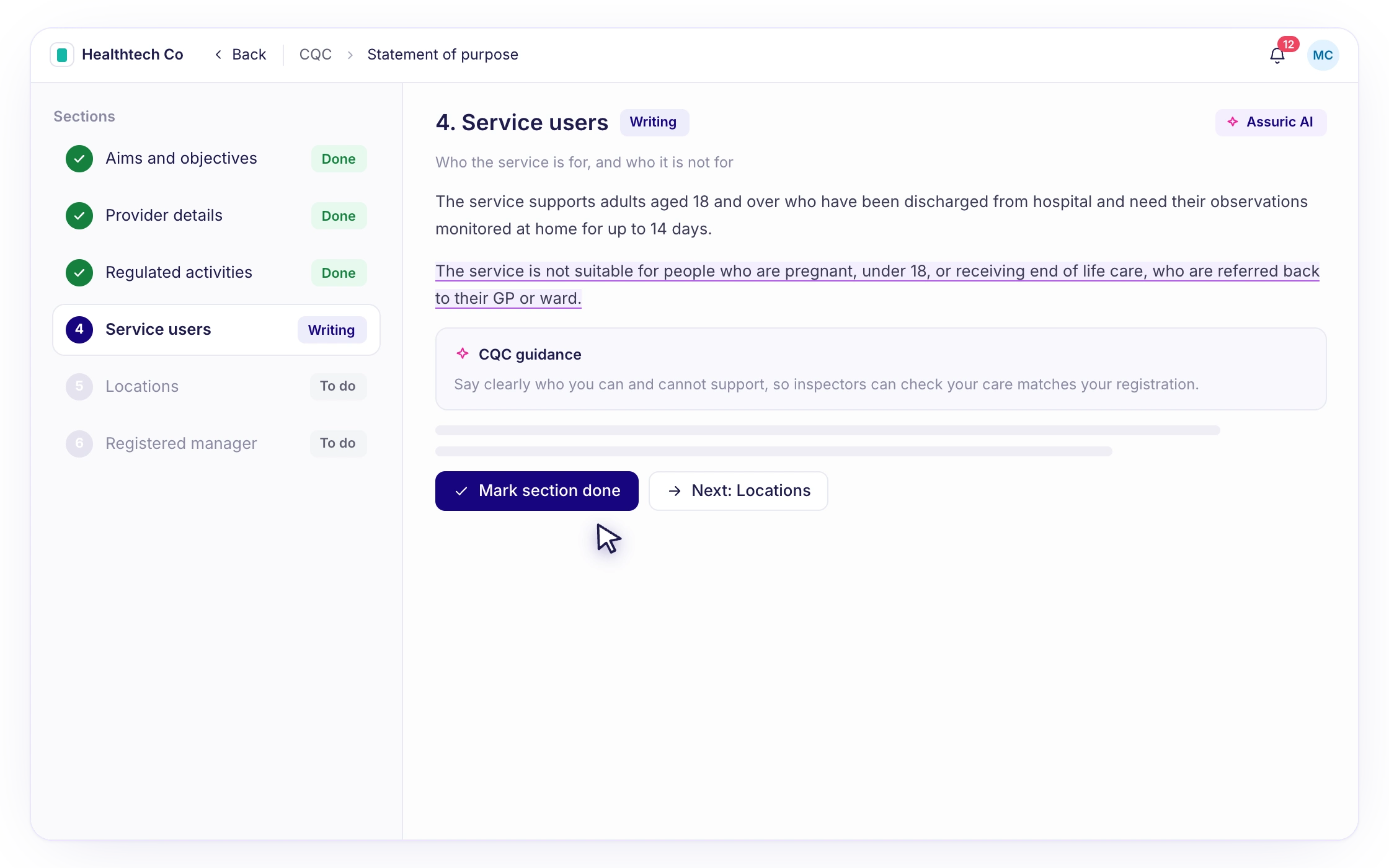
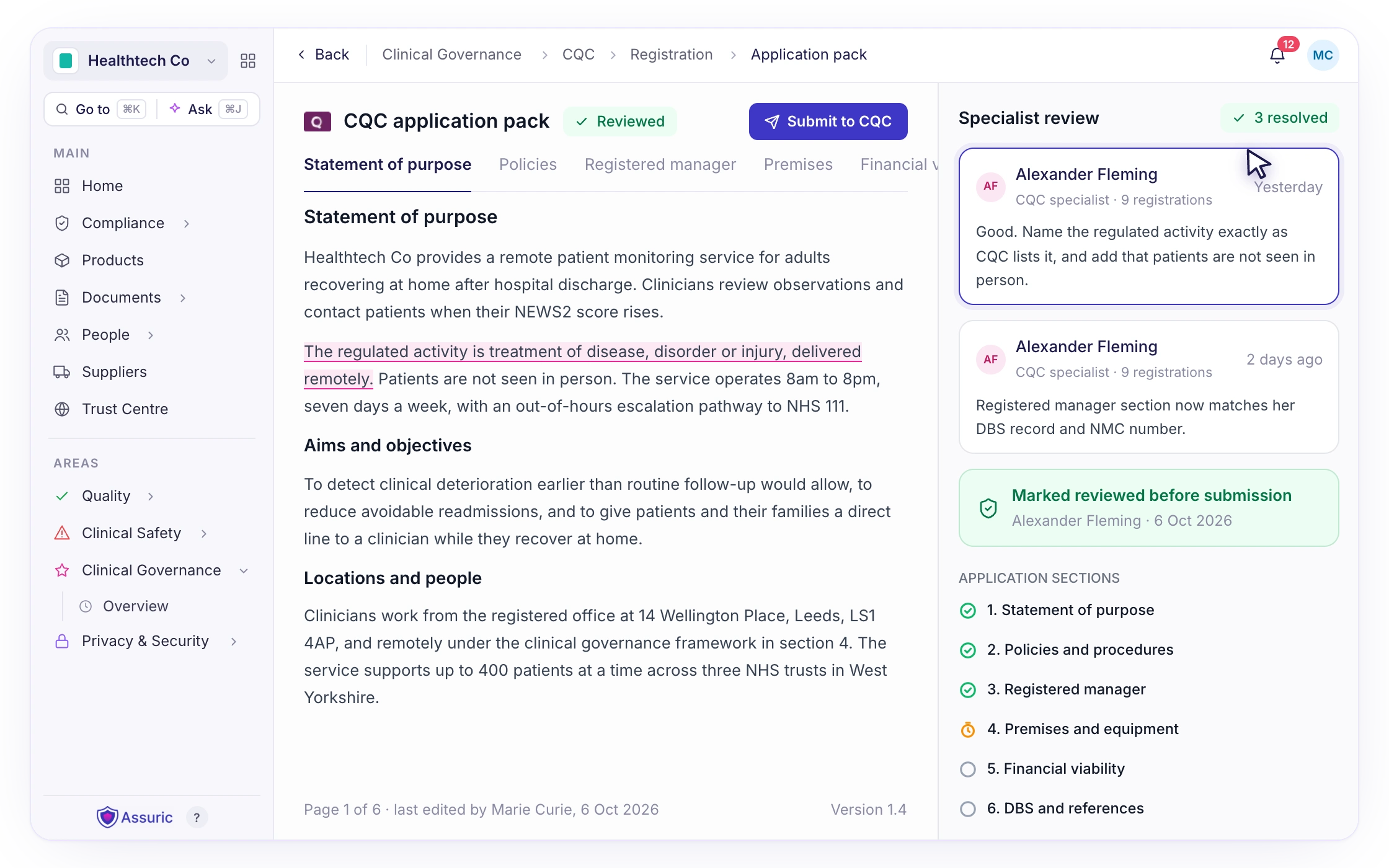
The document your whole application rests on, built section by section against what the CQC expects rather than filled into a blank form. It stays live in your workspace, so updates and notifications are quick to make.
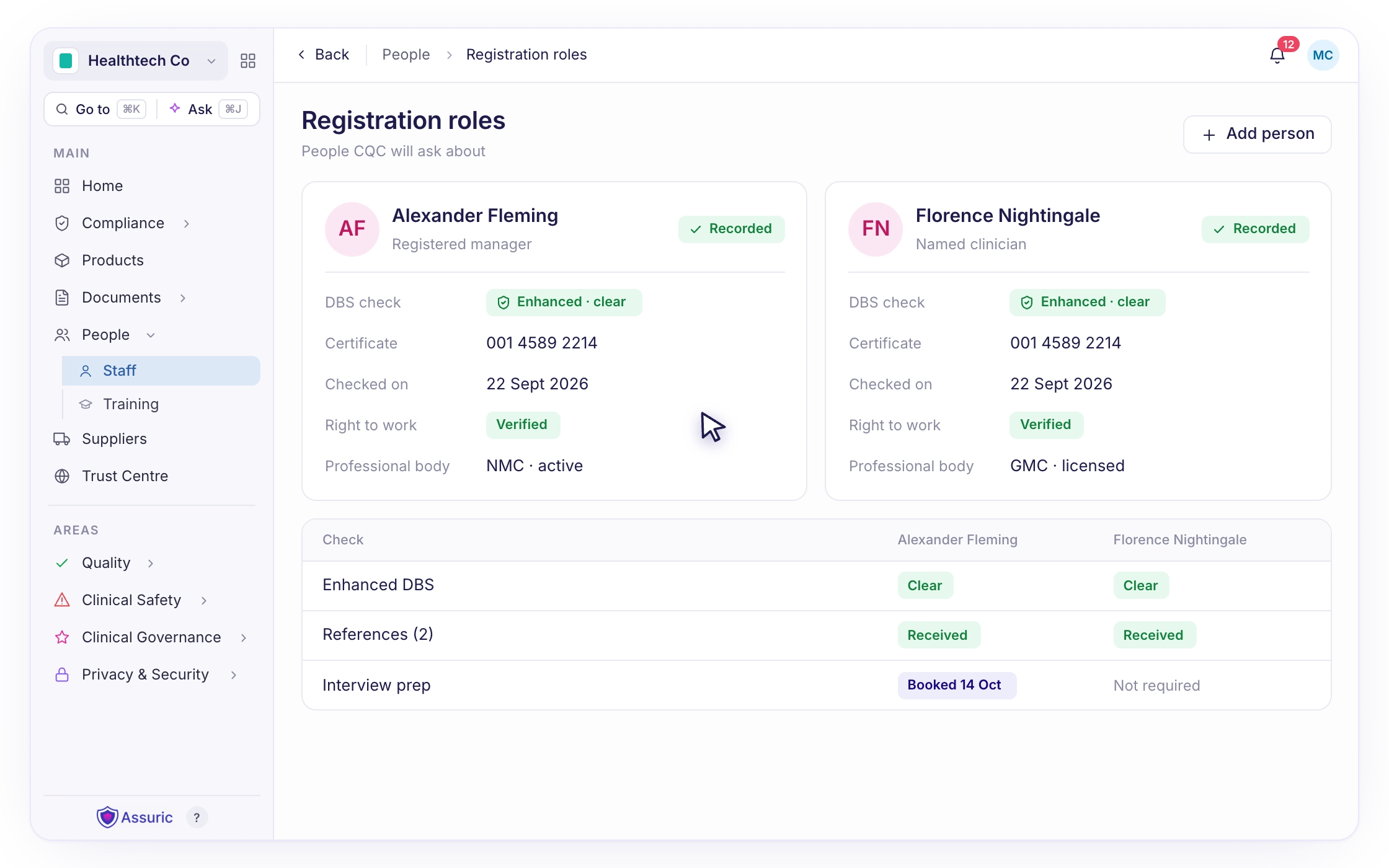
A named registered manager, a named clinician and DBS checks are all part of the application. They are recorded against the people who hold them rather than tracked in a separate spreadsheet.
Our CQC experts can review your application and supporting documents before submission, which is the difference between a decision and a request for more information.
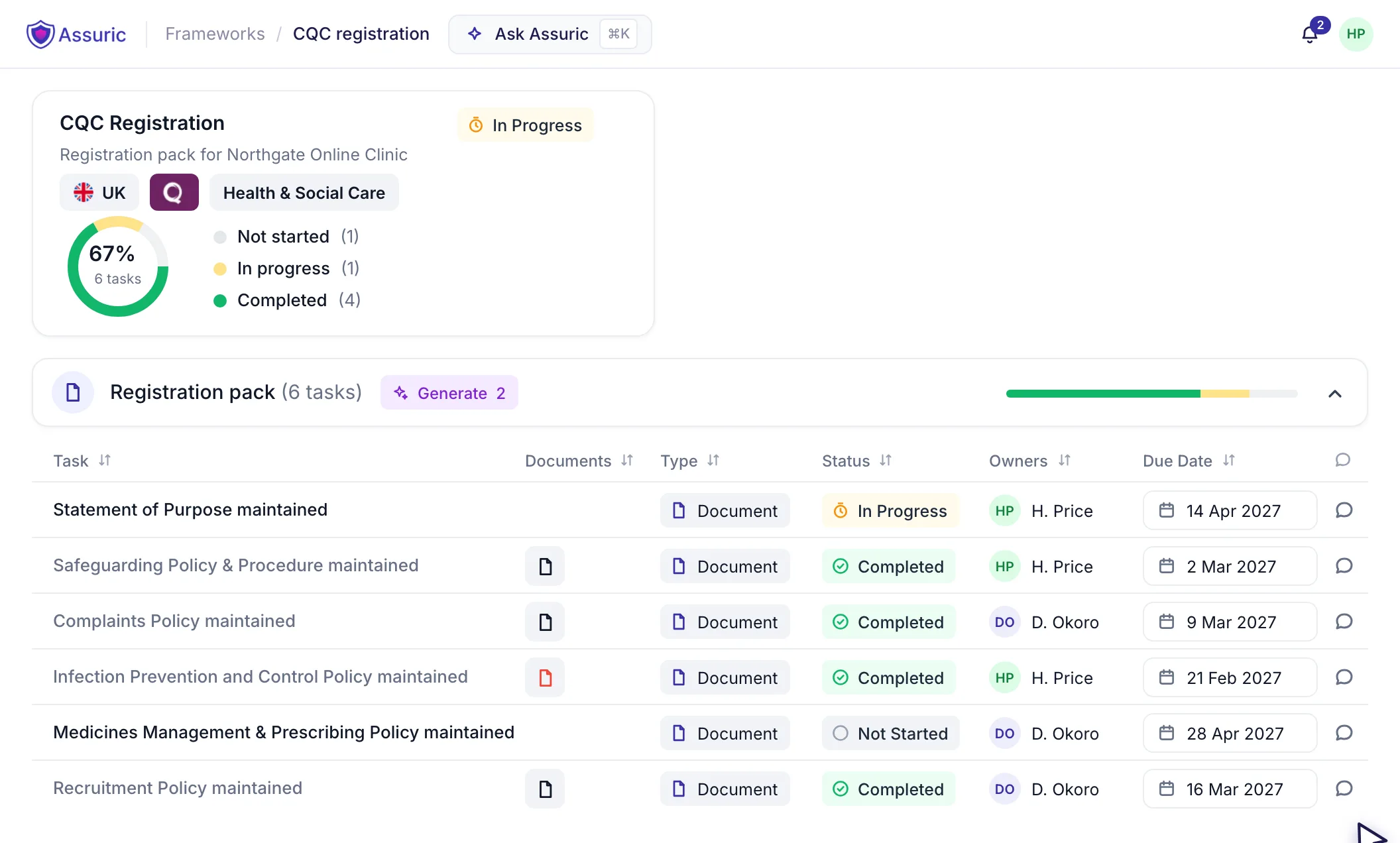
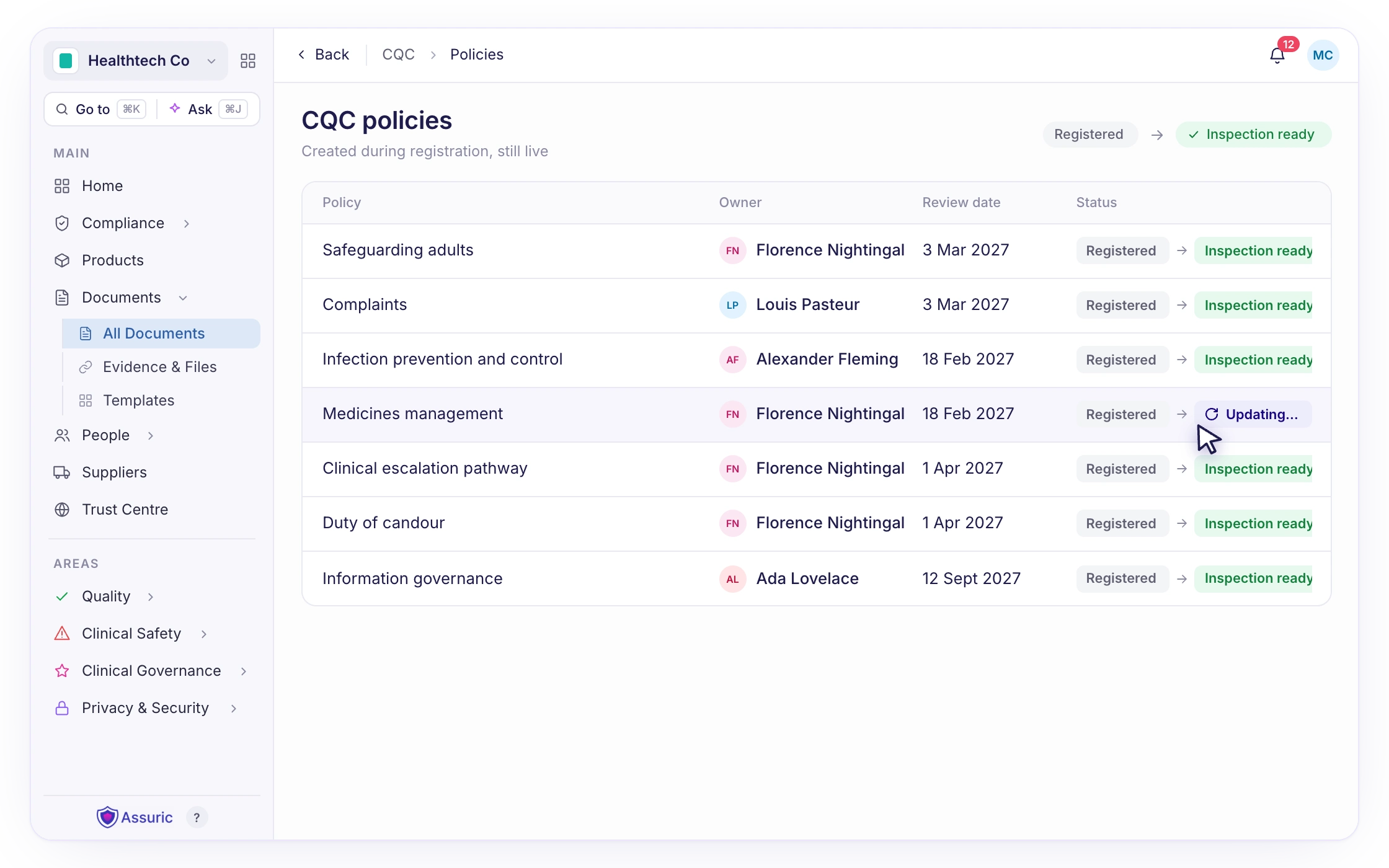
The policies you register with are the ones you will be inspected against. They stay live in your workspace with review dates and owners, so you come out of registration already set up rather than starting again.
Benefits
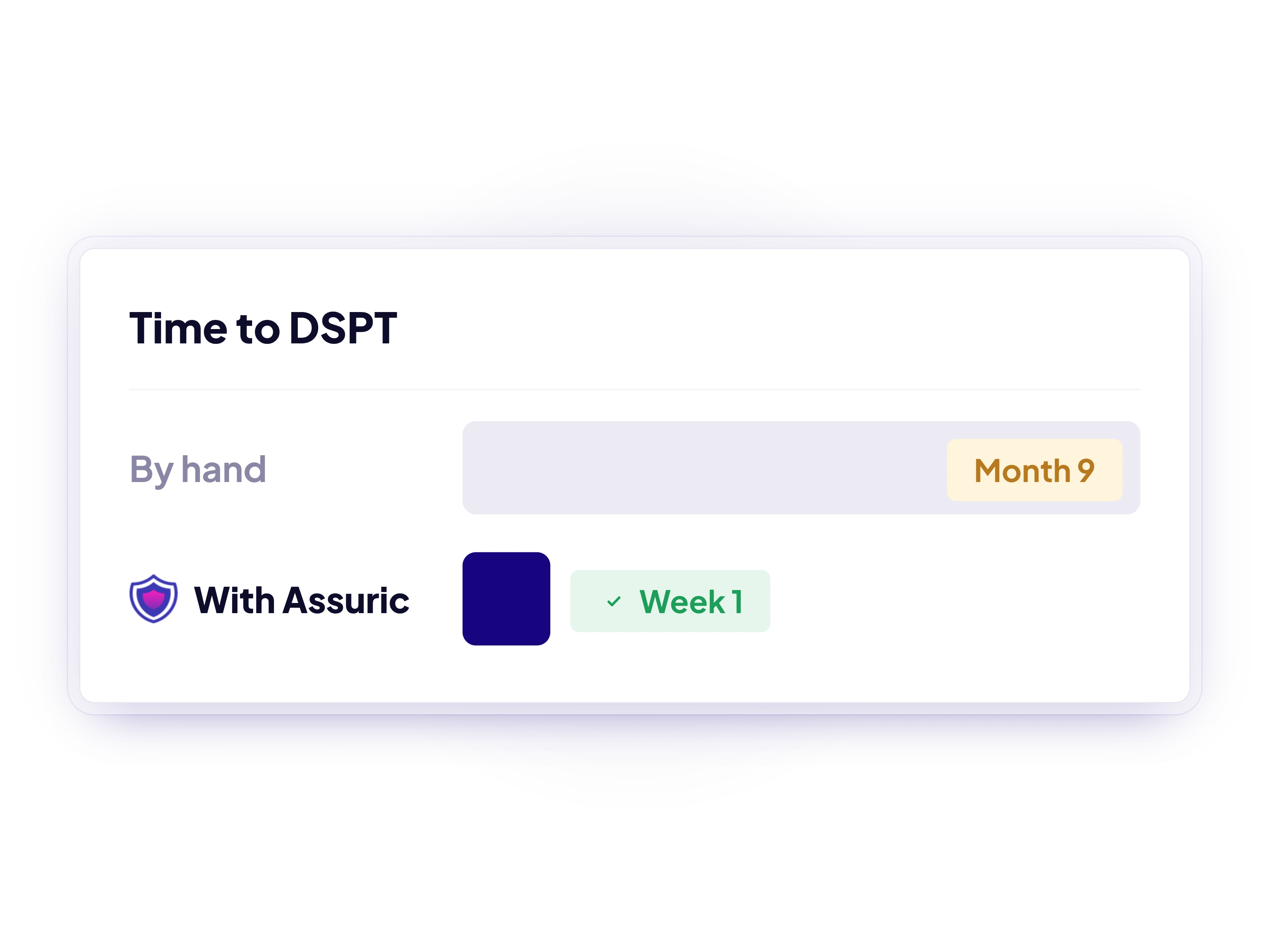
Every week an application sits waiting is a week you can’t provide the service. Submit complete, and the wait is the CQC’s process rather than your paperwork.
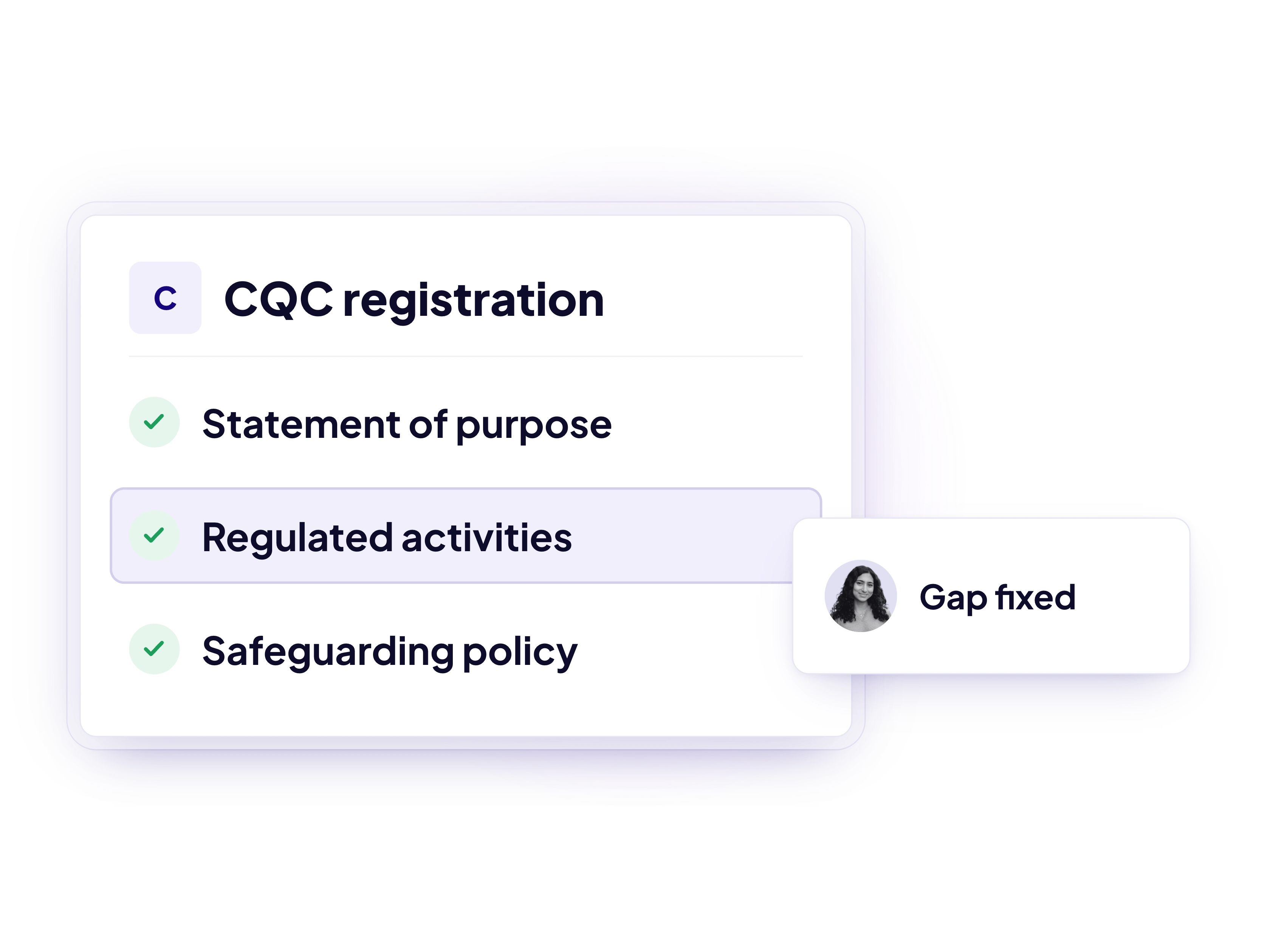
Your application is reviewed before it is submitted, so it does not sit waiting on the gaps that usually cause delay.
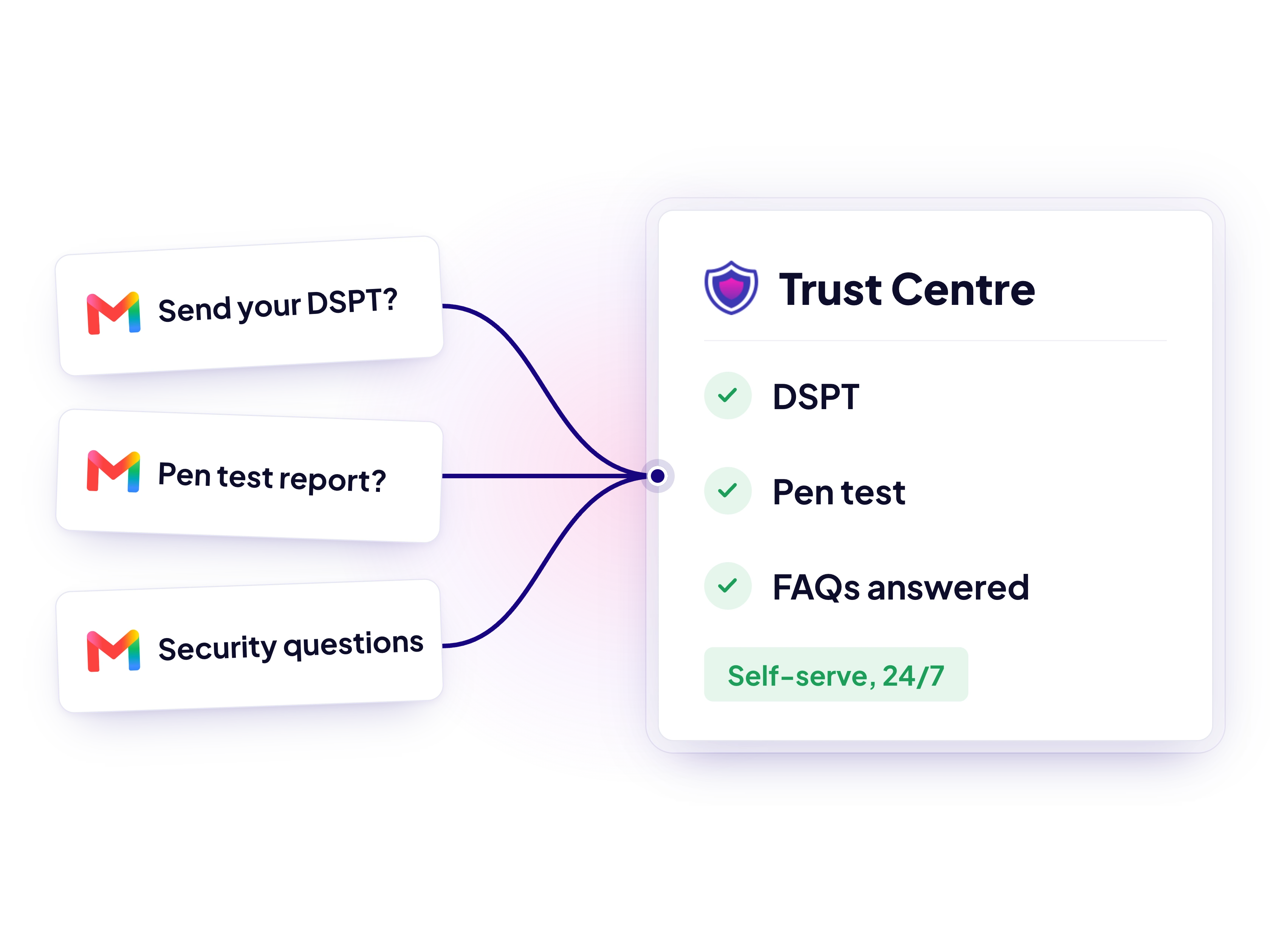
You start from a complete document set tailored to your service, instead of working out from scratch what the CQC expects.
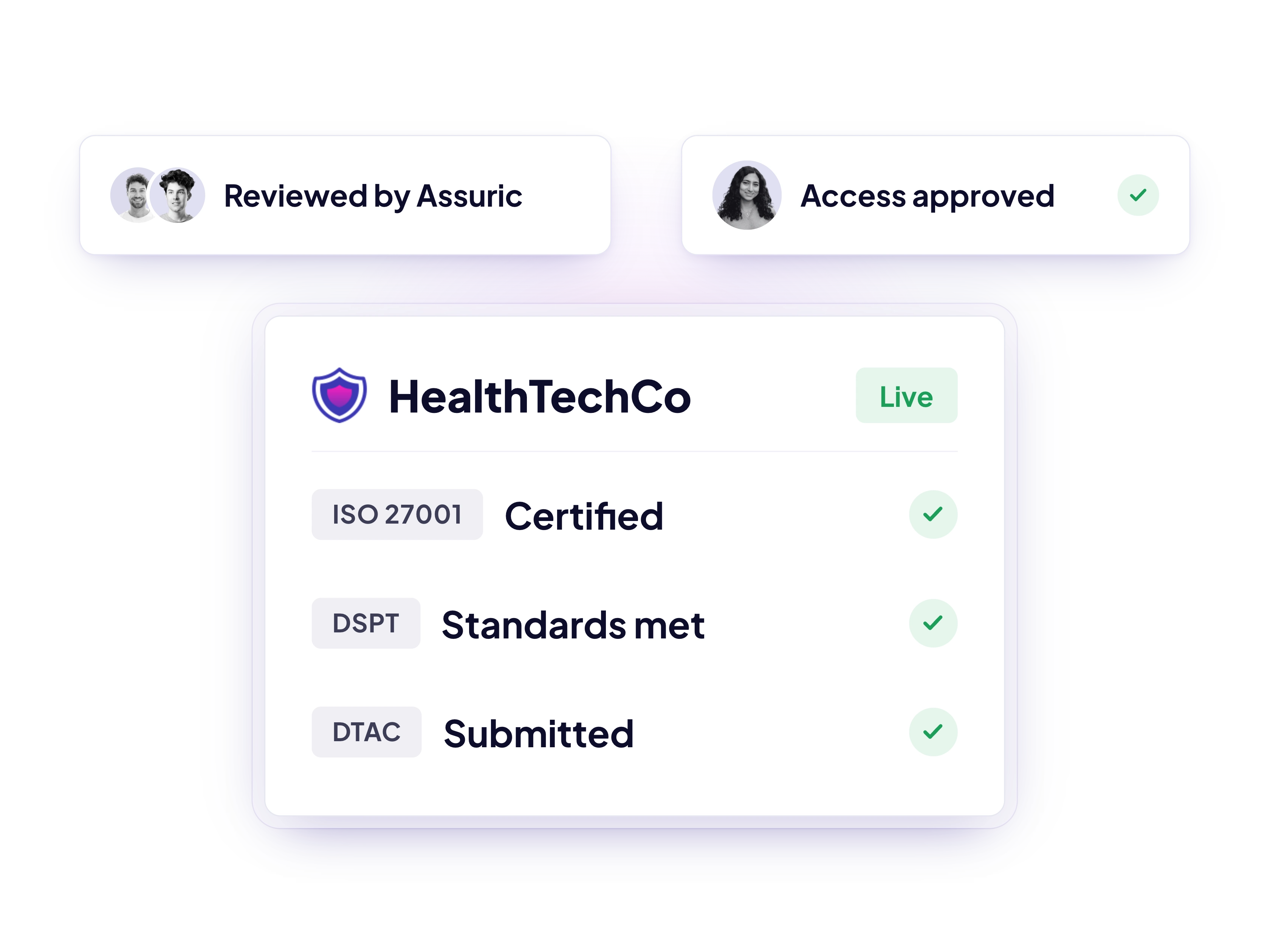
A complete, well-evidenced application is the CQC’s first impression of how you run your service.
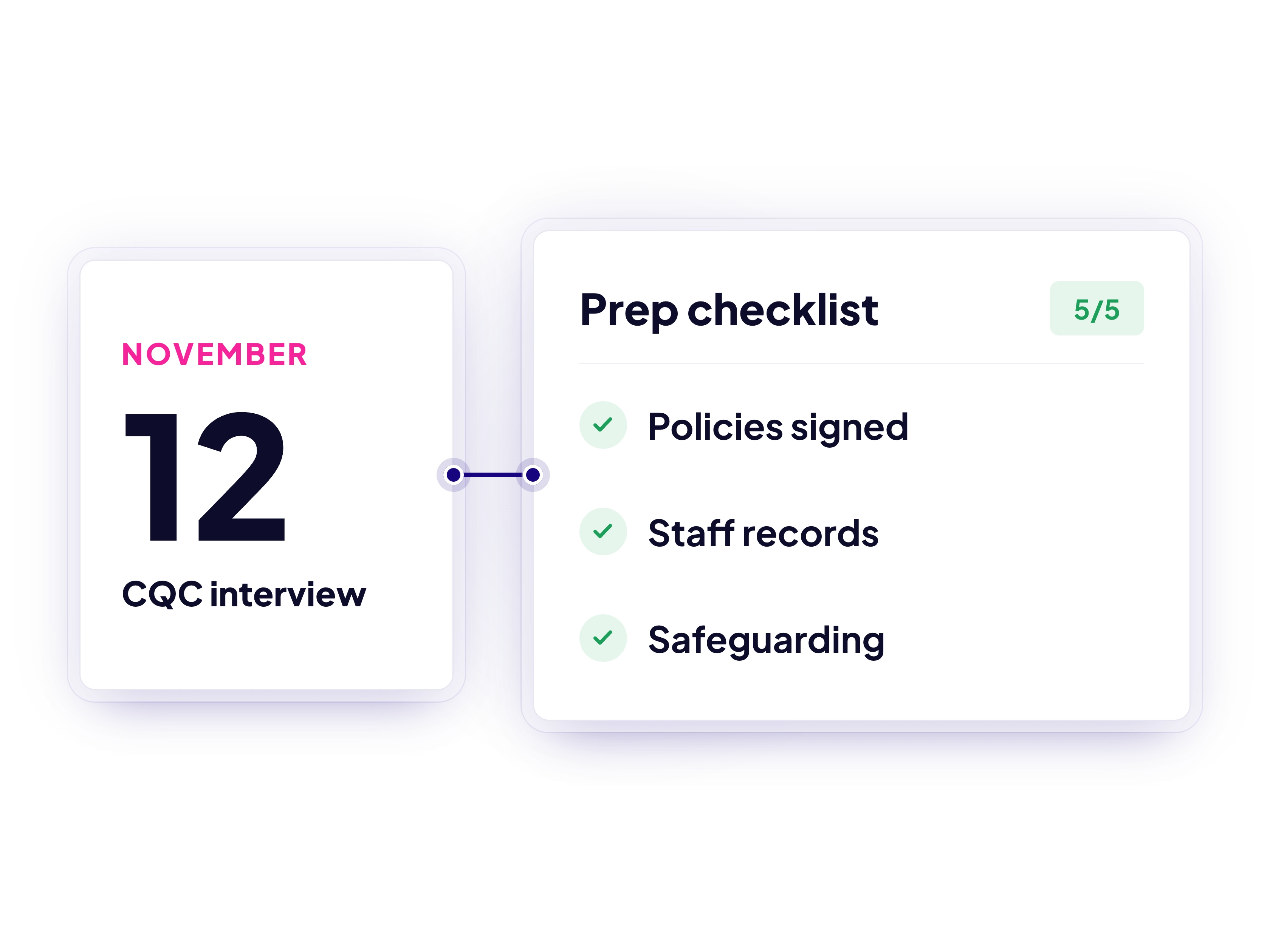
Your policies, governance and people records are already in the system you’ll keep using, so you come out of registration set up for inspection, not starting again.

“We couldn't speak highly enough of both the Assuric team and the platform itself, which is incredibly easy to use, and with the skill and hardworking nature of the Assuric team. They've been a key component in accelerating our progress and deployments!”
Maks Kozarzewski
COO, VitVio

“The Assuric platform is a game changer in the clinical risk management field. It has been carefully designed to make the job of a CSO significantly more streamlined. The team are excellent and responsive to any product suggestions I have requested, and it has been a pleasure to work with them.”
Paul Llewellyn
CCIO, Accenture

“Assuric has been fantastic in helping us quickly and safely navigate regulatory compliance in the UK. From completing Cybersecurity requirements to DSPT, DCB0129, and DTAC, the team was supportive, extremely knowledgeable, and the platform made everything quick and straightforward. A separate regulatory company we consulted at the beginning even remarked on how quickly we achieved compliance!”
Katie Baker
Director UK & Ireland, Tandem
Overlapping requirements and evidence are mapped across frameworks automatically, so you never do the same work twice.
A defined set of policies and procedures (covering safeguarding, complaints, governance, recruitment, medicines and infection control), your statement of purpose, enhanced DBS checks for the key people, and supporting evidence that varies with the service you provide.
Timelines vary with the service type and how complete your application is on submission. Incomplete applications are the most common cause of delay, which is why the document set and the pre-submission review matter.
Organisations need a nominated individual, and organisations and partnerships must include a registered manager application alongside the provider application (NHS trusts and other health service bodies are usually exempt). Both need enhanced DBS checks, and it’s all recorded in your workspace.
At this stage you are getting registered: the document set, the statement of purpose and the role records, in one place instead of a folder of Word files. Those same documents are the ones you are inspected against, so you finish registration with your compliance already set up.
Yes. Our CQC experts work through the document set with you and review the application before you submit it to the CQC.
The CQC rejects applications that are missing documents, and also ones where documents are out of date, leave out what they ask for, or are not relevant to the service. That is what the pre-submission review is for. If it has already happened to you, we can work through what they have asked for and get it resubmitted.
Yes. Bring what you have and we will check it against what the CQC expects for your regulated activities, filling the genuine gaps. Generic or copied policies are a common reason for rejection, so what matters is that each one is relevant to your service rather than where it came from.
Your registration documents stay live with review dates and owners, staff read-and-sign records come straight from your policies, and the same workspace covers staff training, inspection readiness, complaints and clinical audit.
Yes. The registered manager applies separately, alongside the provider application, and we can help prepare it. If you don’t have a registered manager yet, talk to us and we can help.
Featured post
Learn what CQC compliance is, who needs to register, how CQC inspections work, what evidence you'll need, and how to prepare for registration and inspections.

See how our CQC experts, tailored policies and step-by-step guidance get your application right before you submit.


